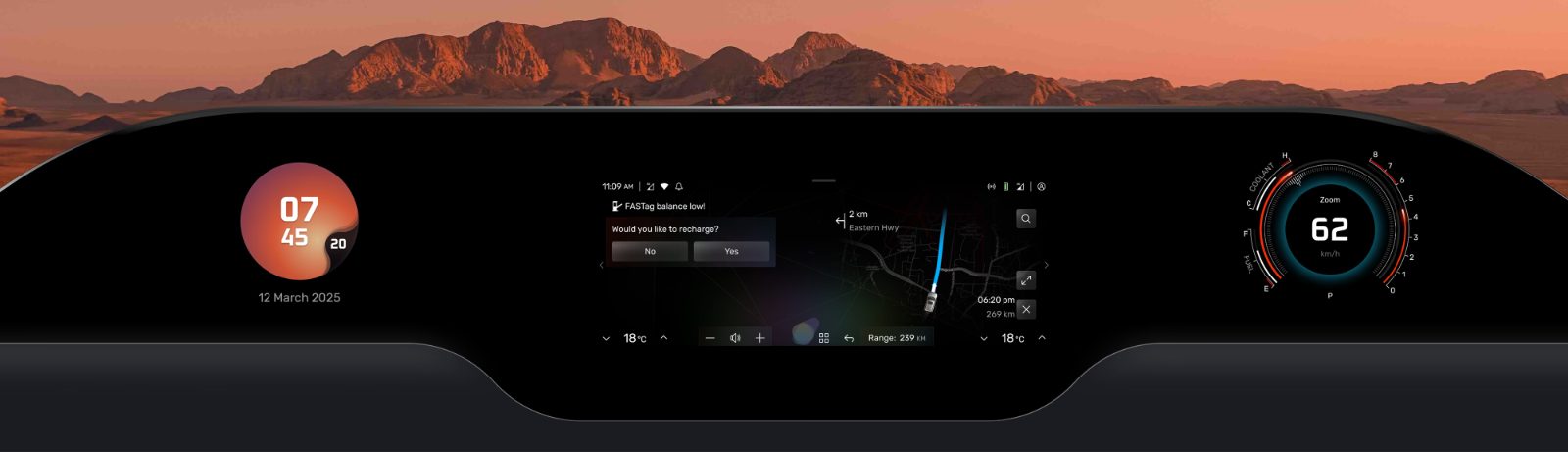
Standardised interfaces, but discovery still left to the driver.
Mahindra's HMI ecosystem ran across many vehicles without a unified framework, creating fragmented experiences. A new platform, UI Rise, standardised interface structure, but still relied on manual feature discovery in an attention-constrained driving environment.
As system complexity grows, the cognitive effort to access functionality rises with it. A cross-functional design team was tasked with rethinking the interaction model , from static, feature-based access to a context-aware experience layer.
Vehicles became software-defined. Their interaction models stayed static.
Capabilities expand, but interfaces still rely on explicit user initiation in an environment of limited attention. The problem isn't missing functionality , it's the system's inability to align capability with context in the moment.

Hidden functionality
Critical features are buried deep within system layers.
Manual discoverability
Increasing automation, yet the user still goes looking for functionality.
Fragmented attention
Interaction splits focus between driving and interface, reducing awareness.
Cognitive overload
Dozens of assistive features presented without prioritisation.
How might we move from feature discovery to contextual orchestration in automotive HMI?
Studying real situations, not isolated tasks.
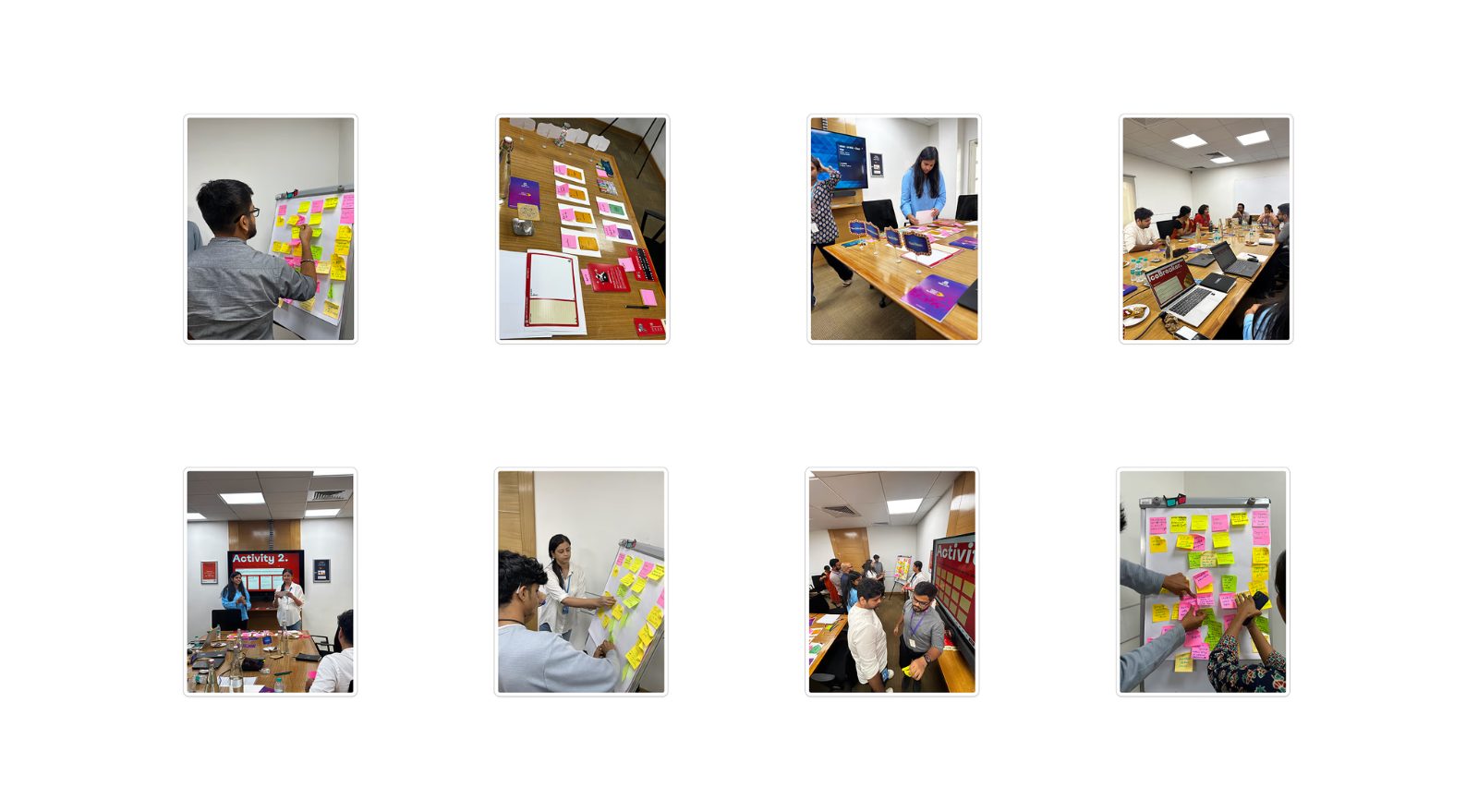
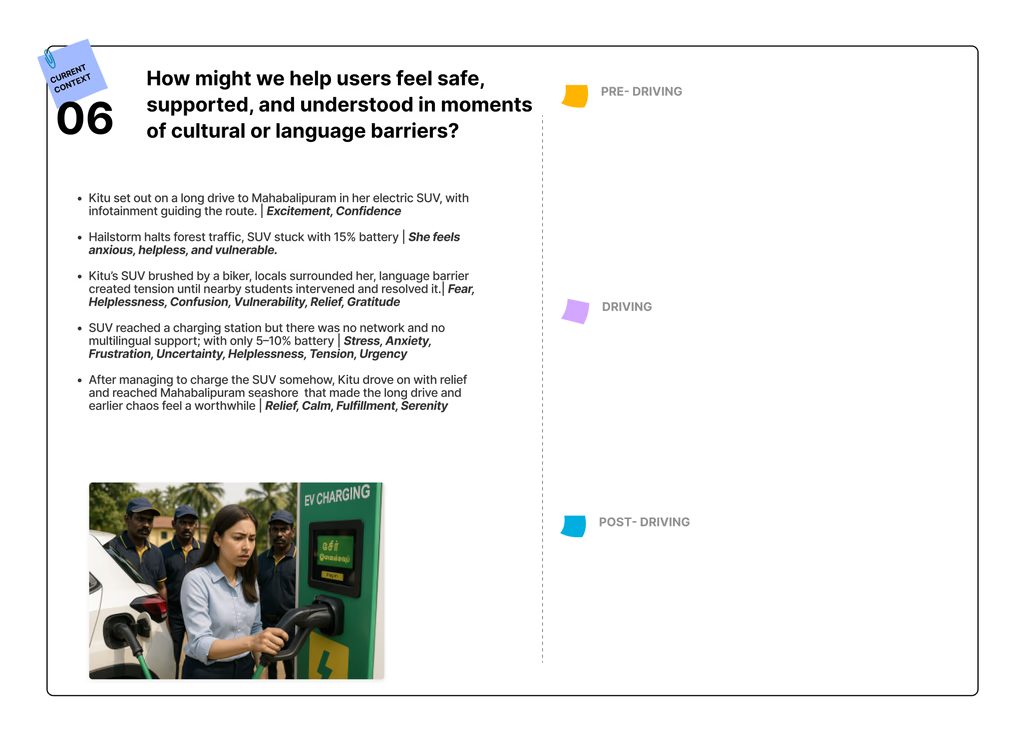
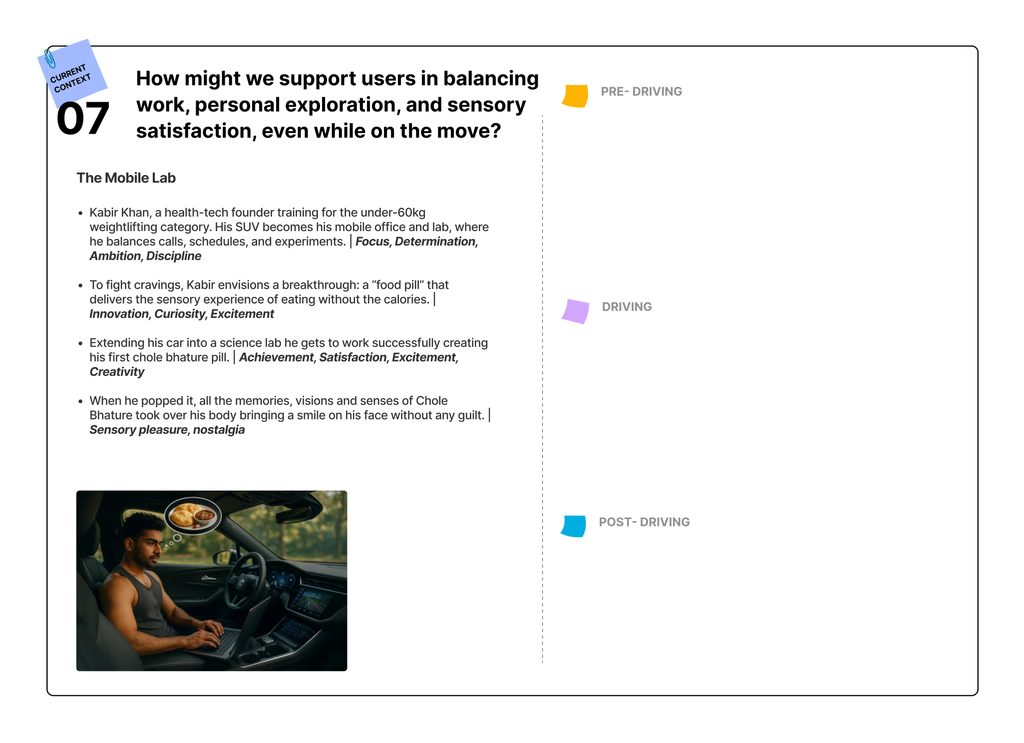
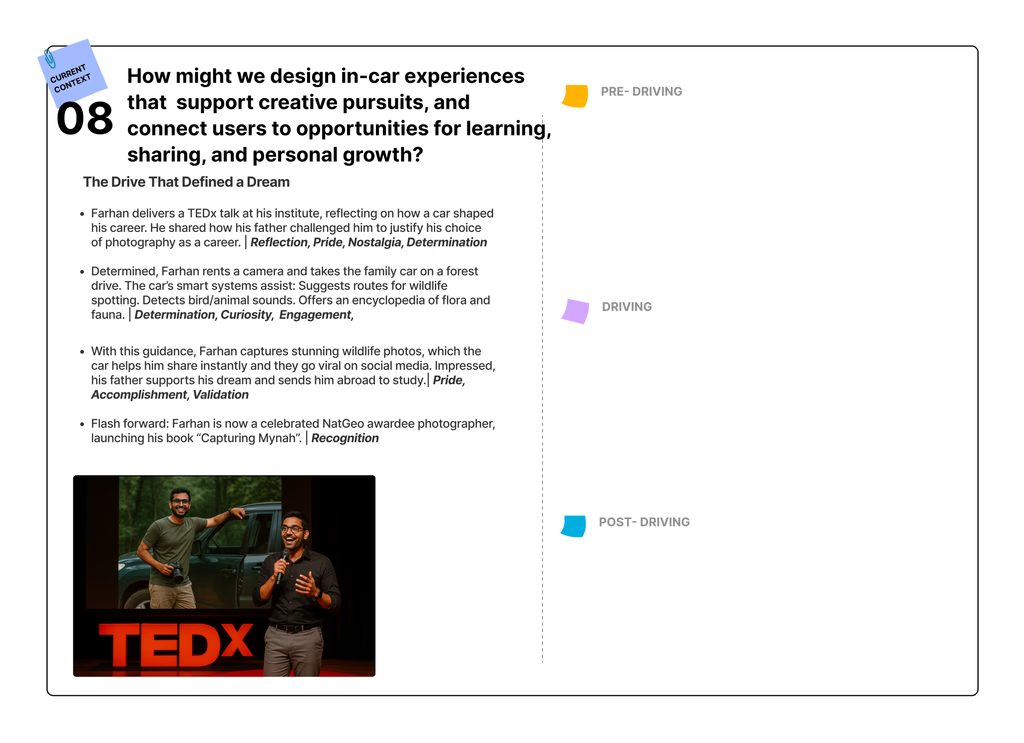
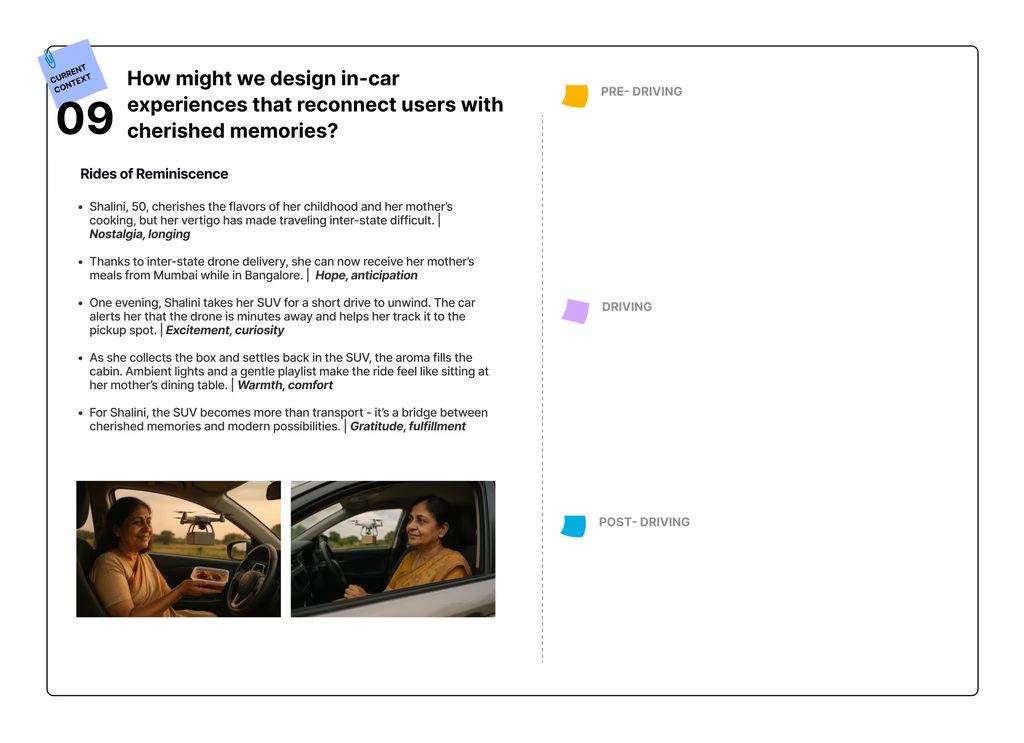
Through story-driven interviews we captured emotionally rich driving narratives , behavioural patterns, breakdown moments, and latent needs across complex, real-world mobility situations.
Real-world context
Driving contexts are situational , pilgrimages, rallies, funerals , where environment shapes needs and expectations.
Behavioural patterns
Behaviour shifts with emotional and physical state , fatigue, urgency, distraction, responsibility.
Shared context
Mobility is deeply social , family dynamics, group interactions, cultural norms, shared experience.
A different lens on mobility
A key insight: the car is not just a machine, it's a social and emotional environment. Across scenarios, the vehicle emerged as:
Private escape
A personal retreat , calm, control, a break from external pressure.
Shared experience
Journeys are shared , conversations and group needs shape attention.
Environment
Surroundings, urgency, and purpose drive how users engage the system.
I designed and facilitated structured narrative workshops capturing edge cases and culturally grounded behaviour. The output wasn't a set of ideas , it was a rich dataset of contextual narratives, both present-day and speculative.
From ambiguous narratives to prioritised interventions.
We synthesised narrative insights into clusters of recurring behavioural signals, revealing patterns in needs, emotional states, and contextual triggers.
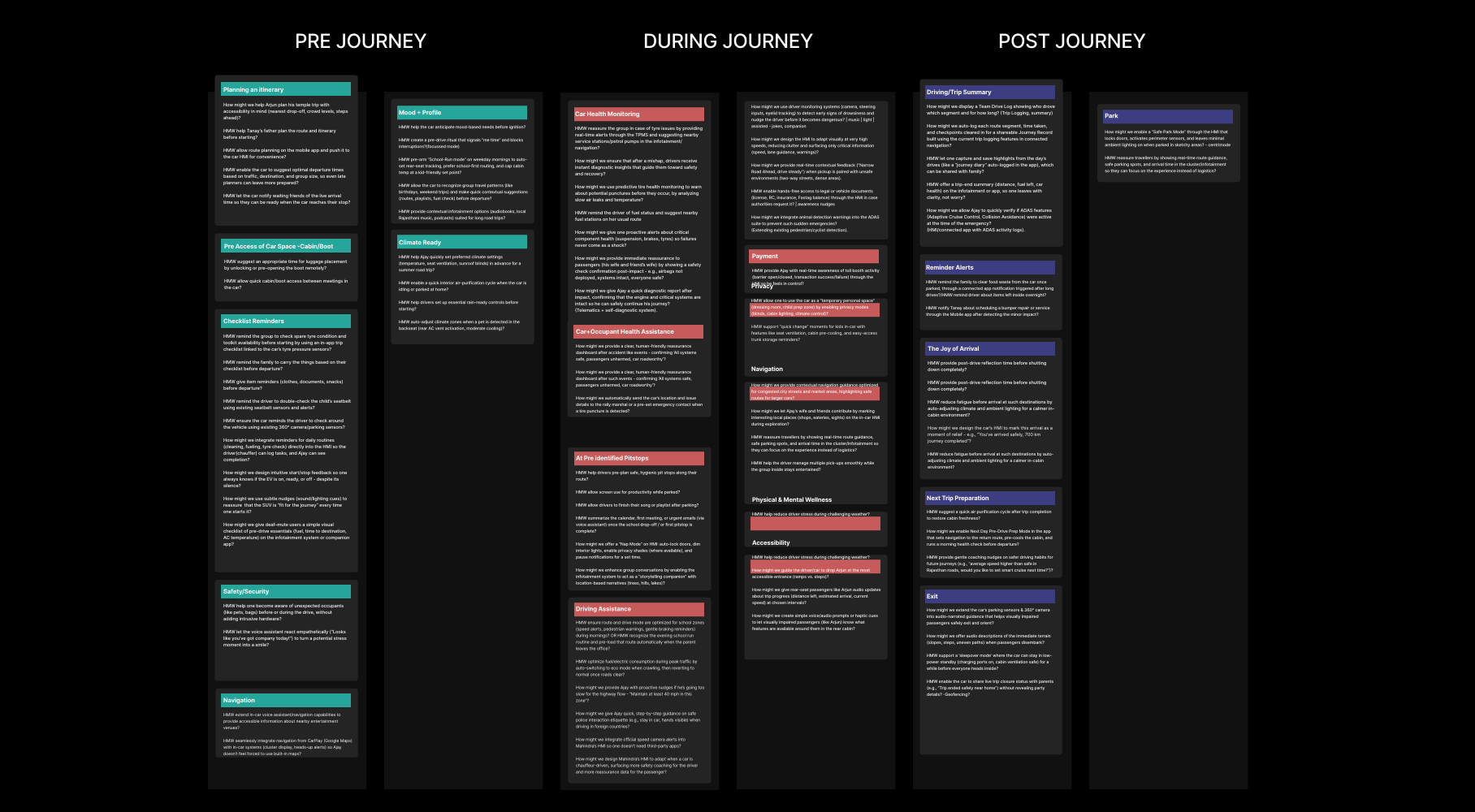
Recurring signals
Behaviours, breakdown moments, and unmet needs that surfaced consistently across scenarios.
Thematic clusters
Signals grouped into broader themes to reveal deeper opportunity areas.
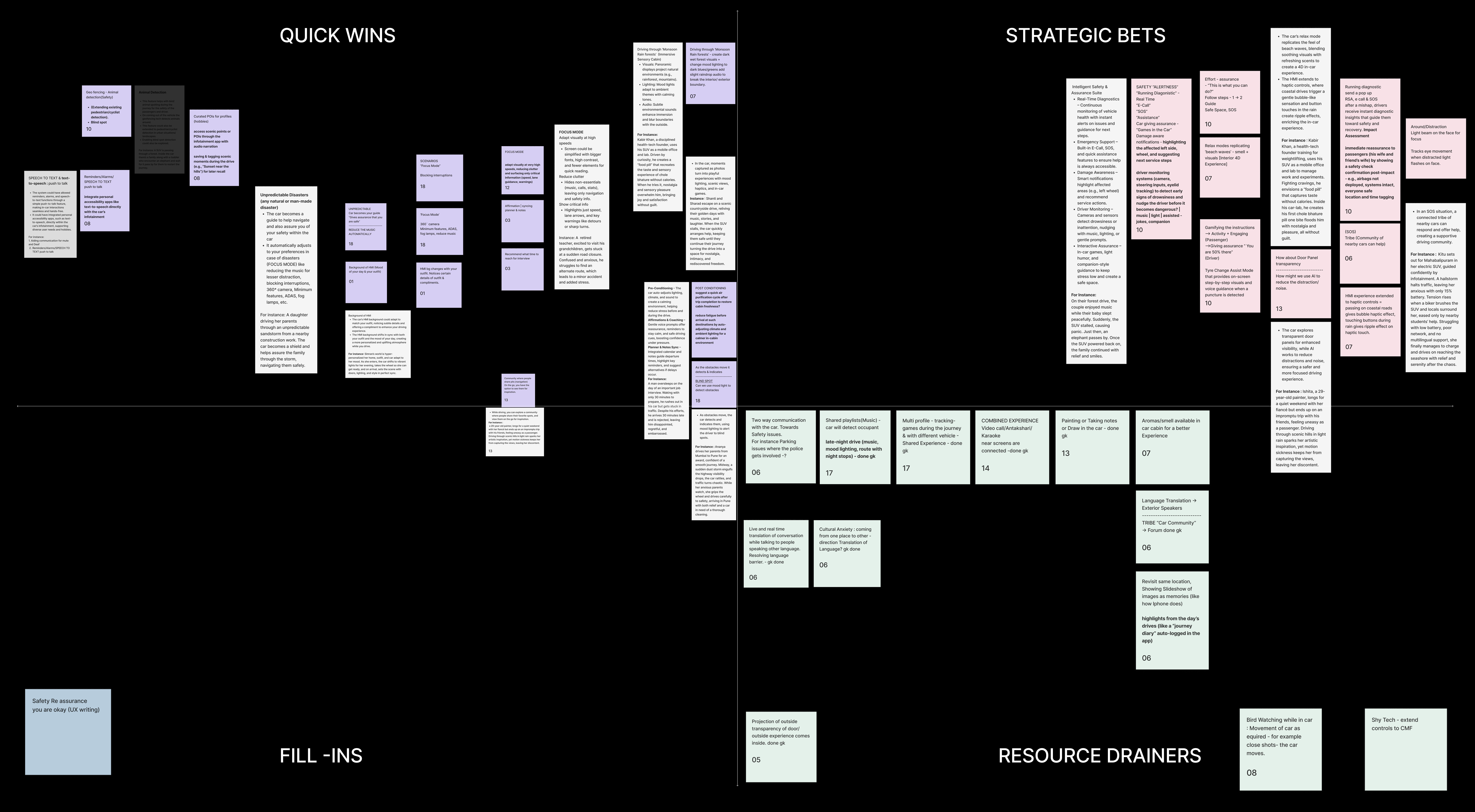
Grouped HMWs
Themes translated into focused "How Might We" questions to guide direction.
Context-to-feature translation
Each opportunity cluster translated into HMI capabilities, mapping contextual triggers to feature interventions across the pre-, during-, and post-journey phases.
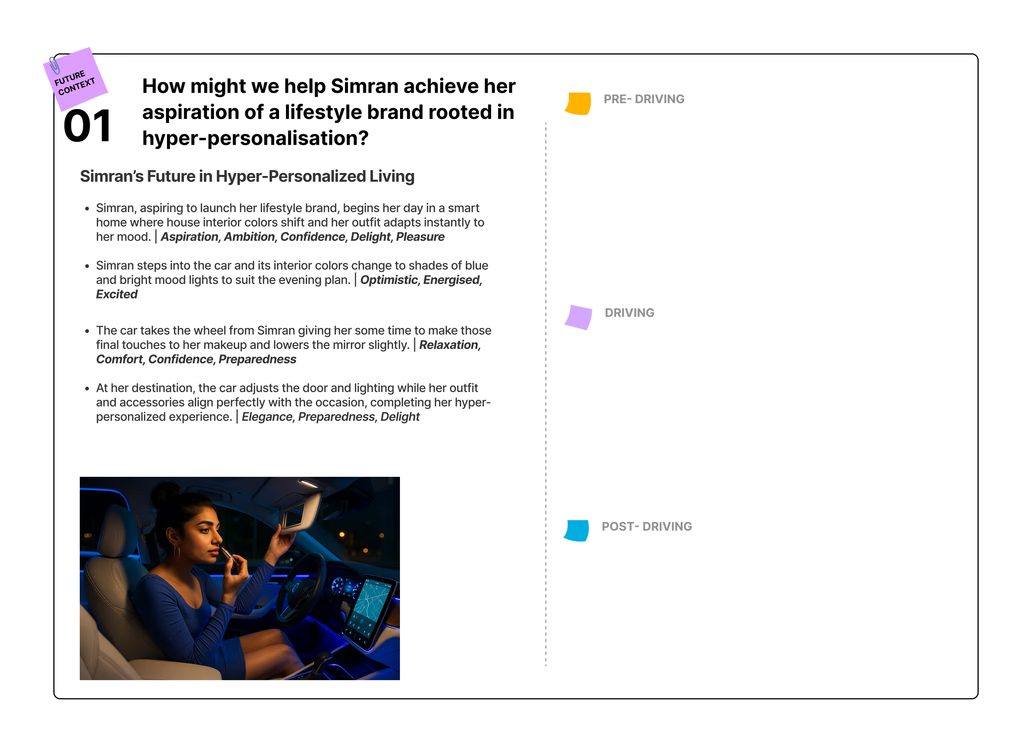
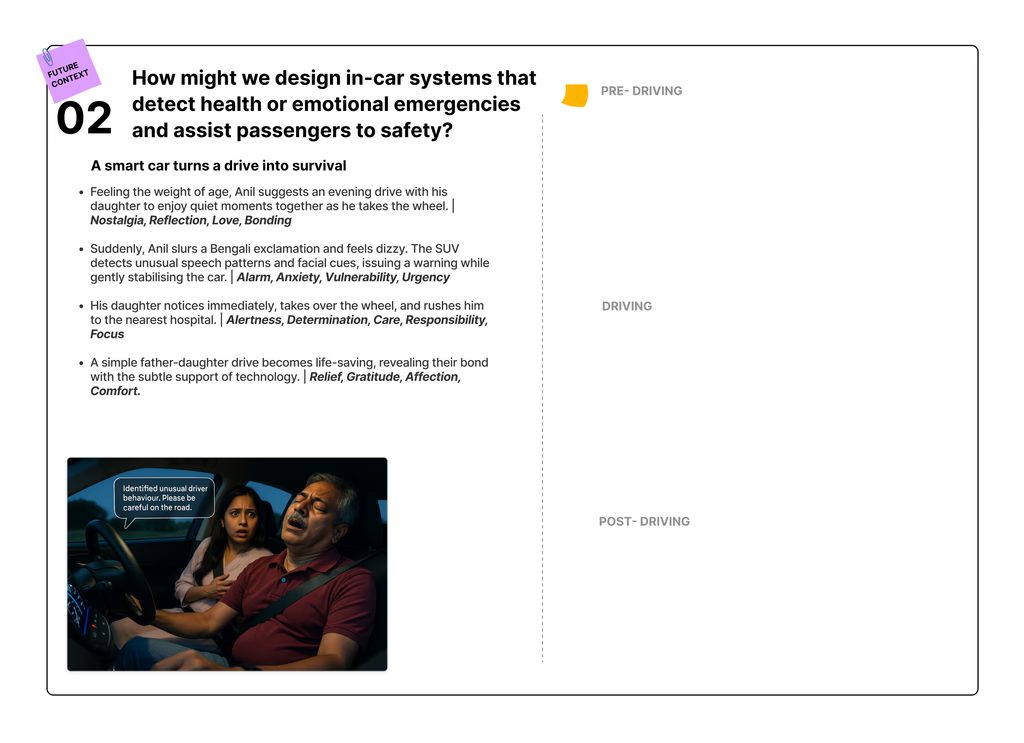
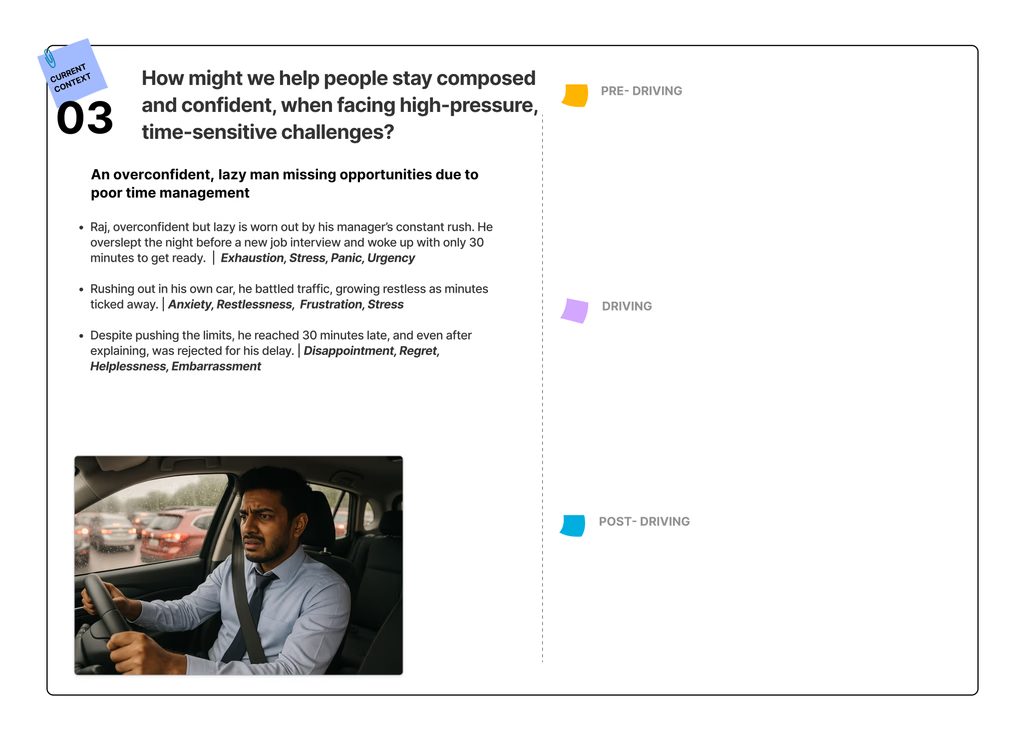
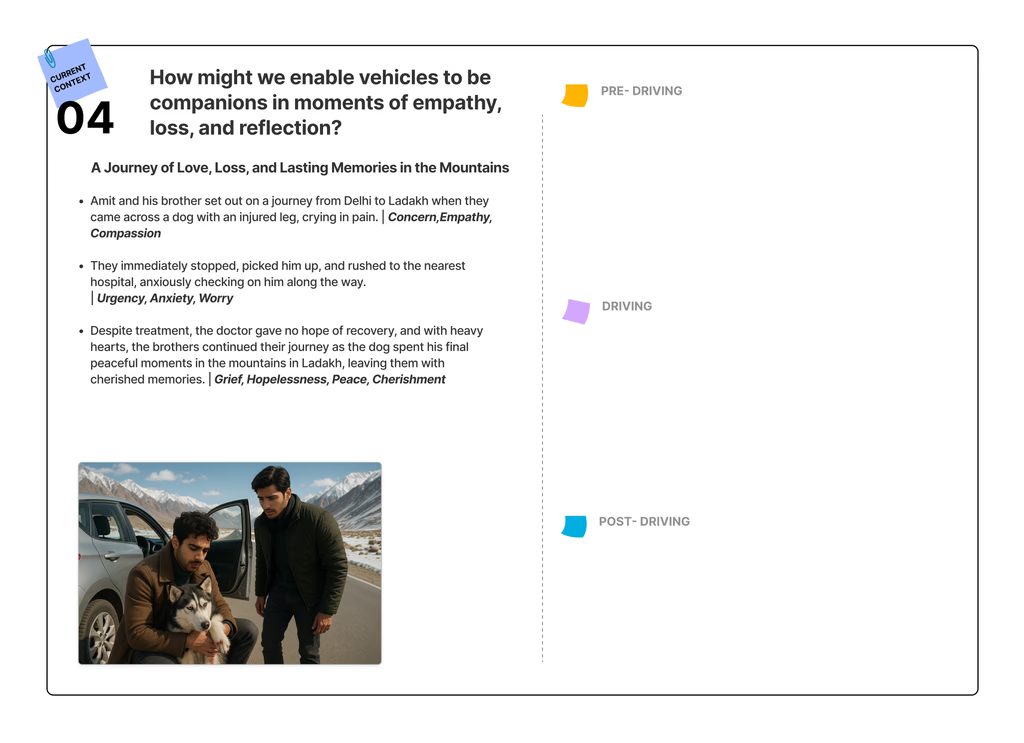
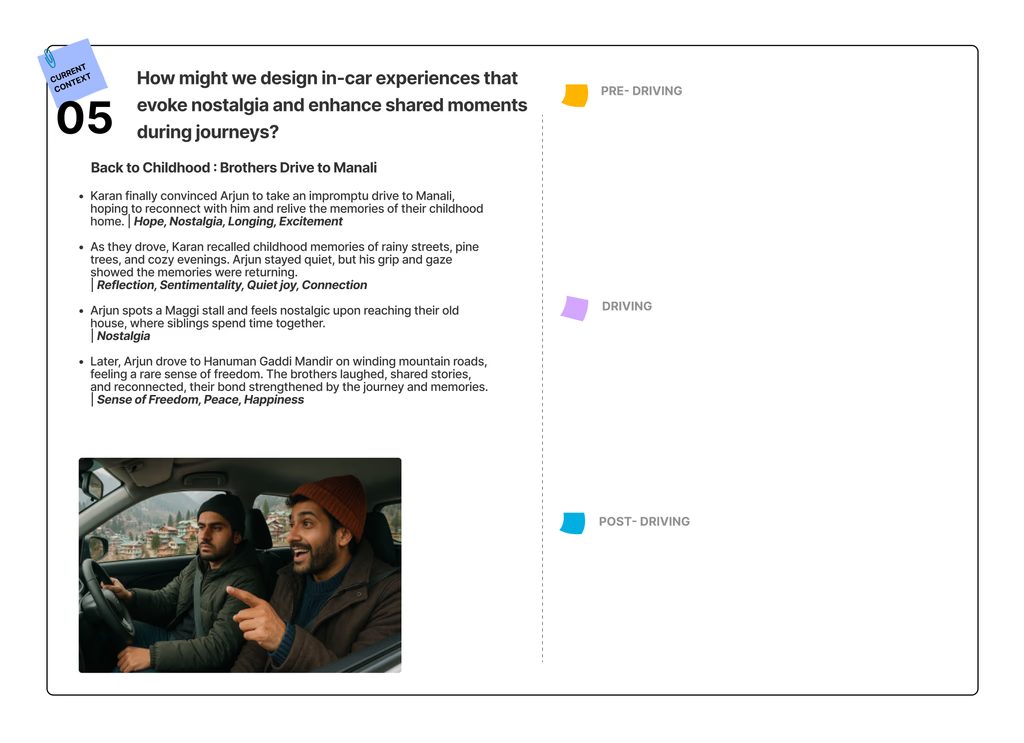
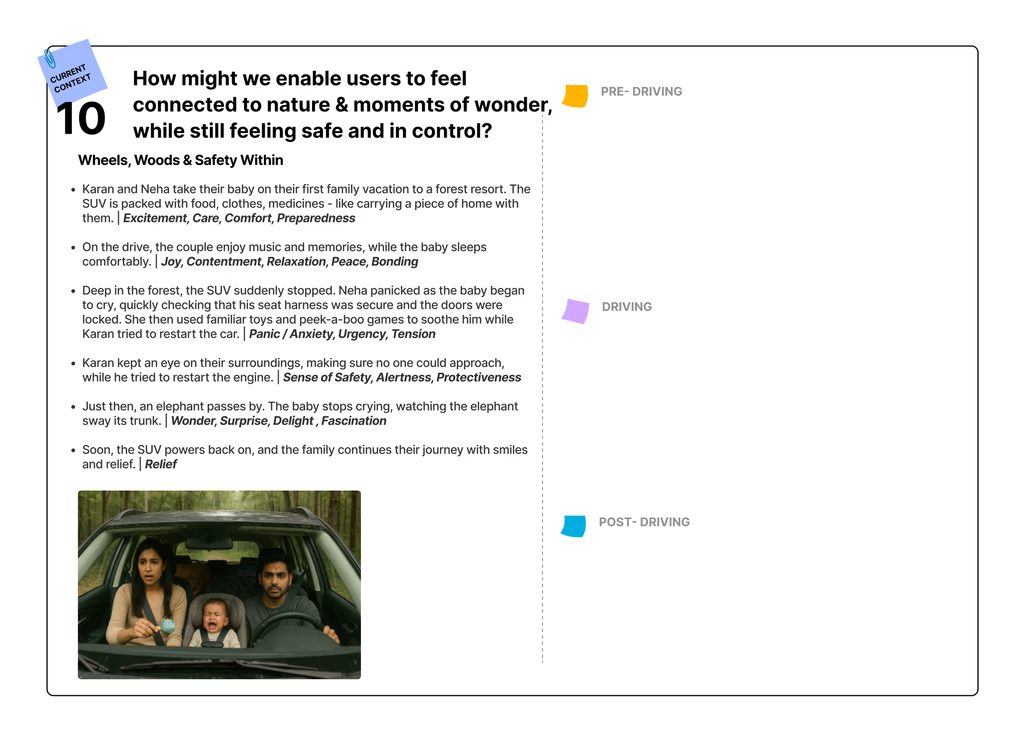
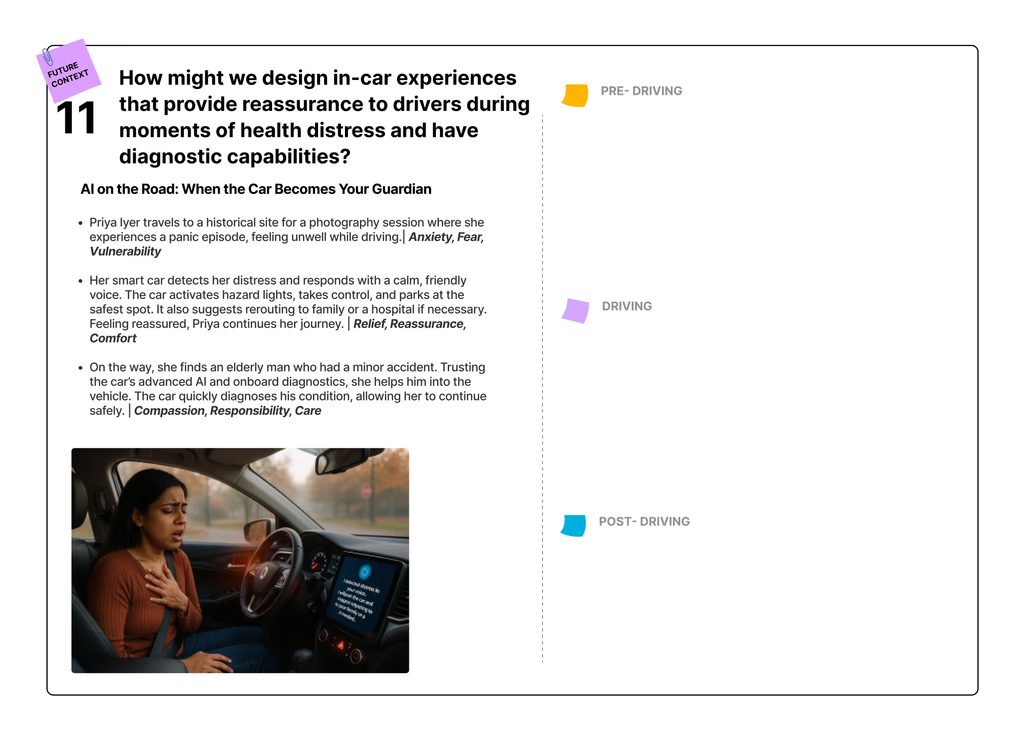
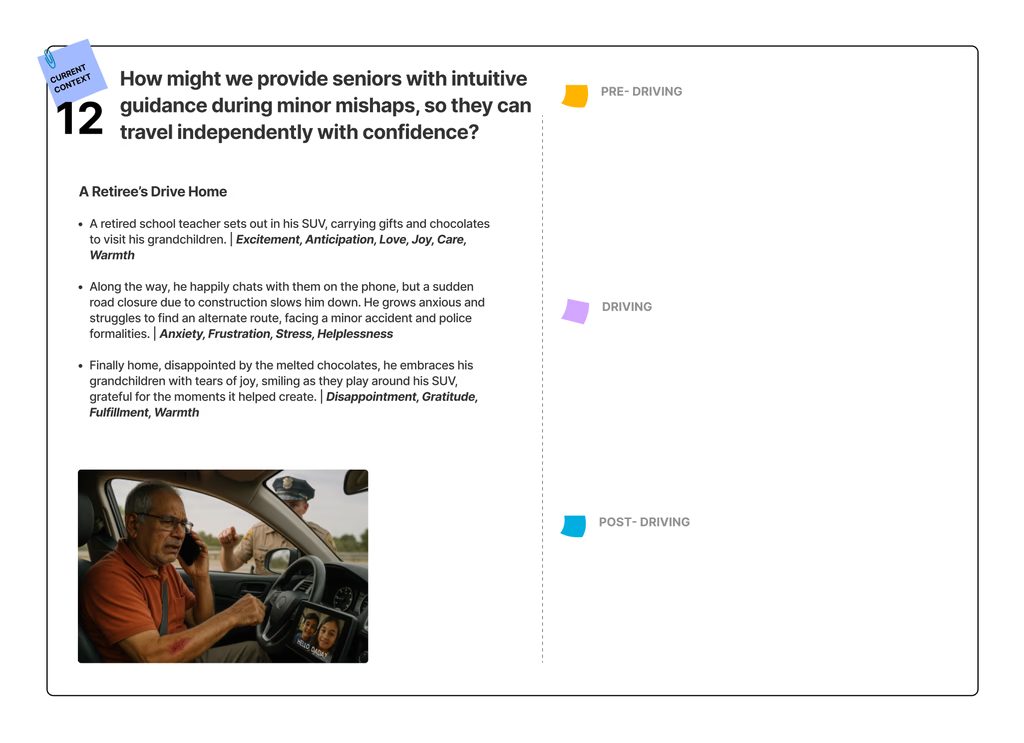
Opportunity areas mapped to focus development on high-impact interventions.
Trend scan & expert consultation
Market signals
Validated emerging opportunities and aligned with product-evolution trends.
Feasibility constraints
Engineering reality check , software-first differentiation, stress-tested assumptions.
Revenue shift
Subscription features, servitization, post-purchase value.
Three behavioural journeys, one adaptive layer.
In an attention-constrained environment, usability and visual richness pull against each other. Aesthetics were intentionally deprioritised , an enhancement layer, not the driver of interaction. Opportunities were mapped across 20 real-world scenarios and synthesised into three core journeys.
Seamless everyday intelligence
Ambient, not interruptive , proactive suggestions, subtle nudges, low cognitive load.
Safety-aware system
From assistant to co-driver , drowsiness detection, passenger comfort, continuous upgrades.
Lifestyle experience
The car as companion , subscriptions, servitization, post-purchase value.
MAIA was designed as an adaptive interaction layer, not a standalone feature , embedded to surface intelligence proactively. The focus: where assistance appears, when it intervenes, and how it behaves across states.
Static UI became dynamic system behaviour.
MAIA's interaction was defined through state-based behaviour governing response timing, interaction hierarchy, and visual feedback. Tap a state to feel how presence shifts.
Response timing
Acts before the need arises , interpreting context to deliver timely, never disruptive, interventions.
Interaction hierarchy
Surfaces what matters, when it matters , prioritising by driver state, intent, and conditions.
Visual feedback
Communicates without demanding attention , ambient, glanceable cues keep focus on the road.
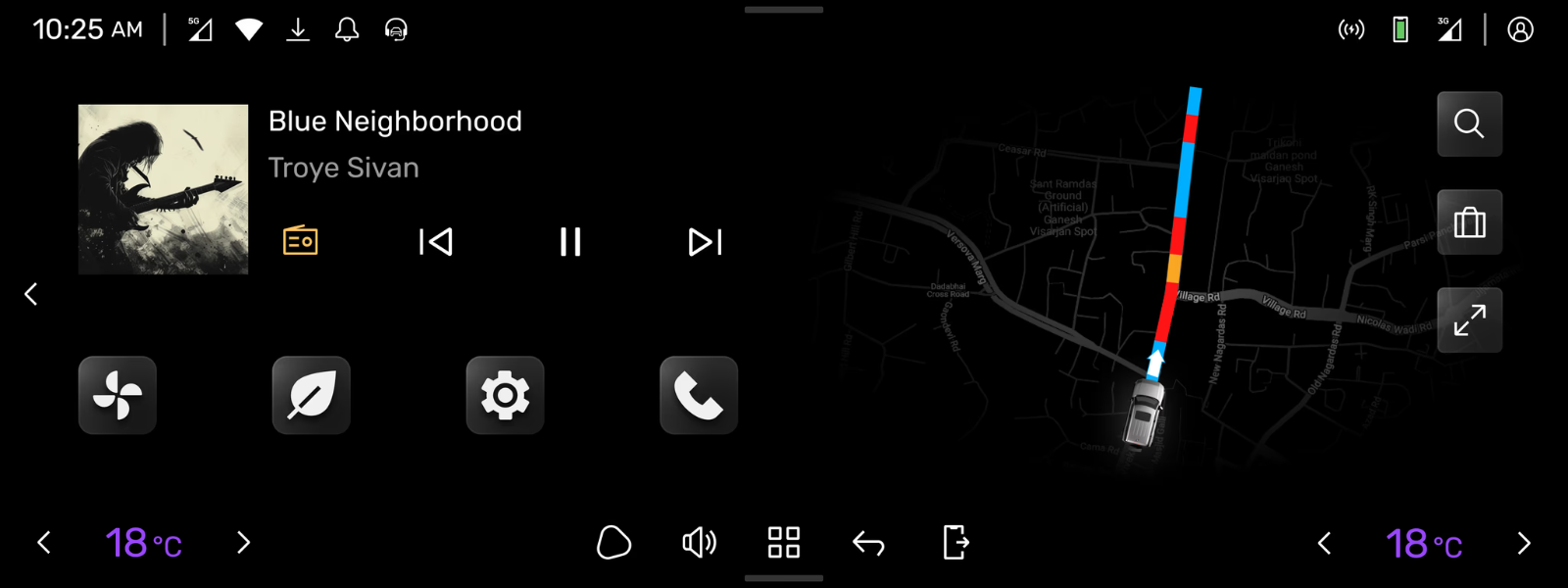
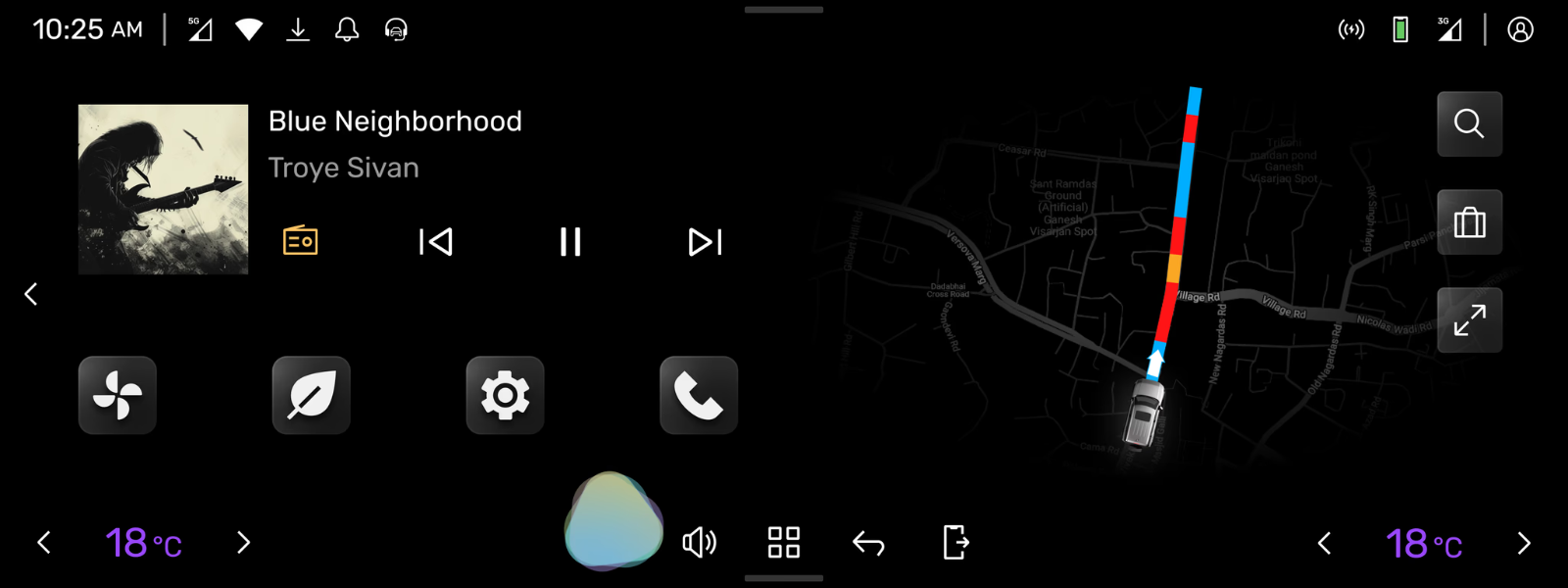
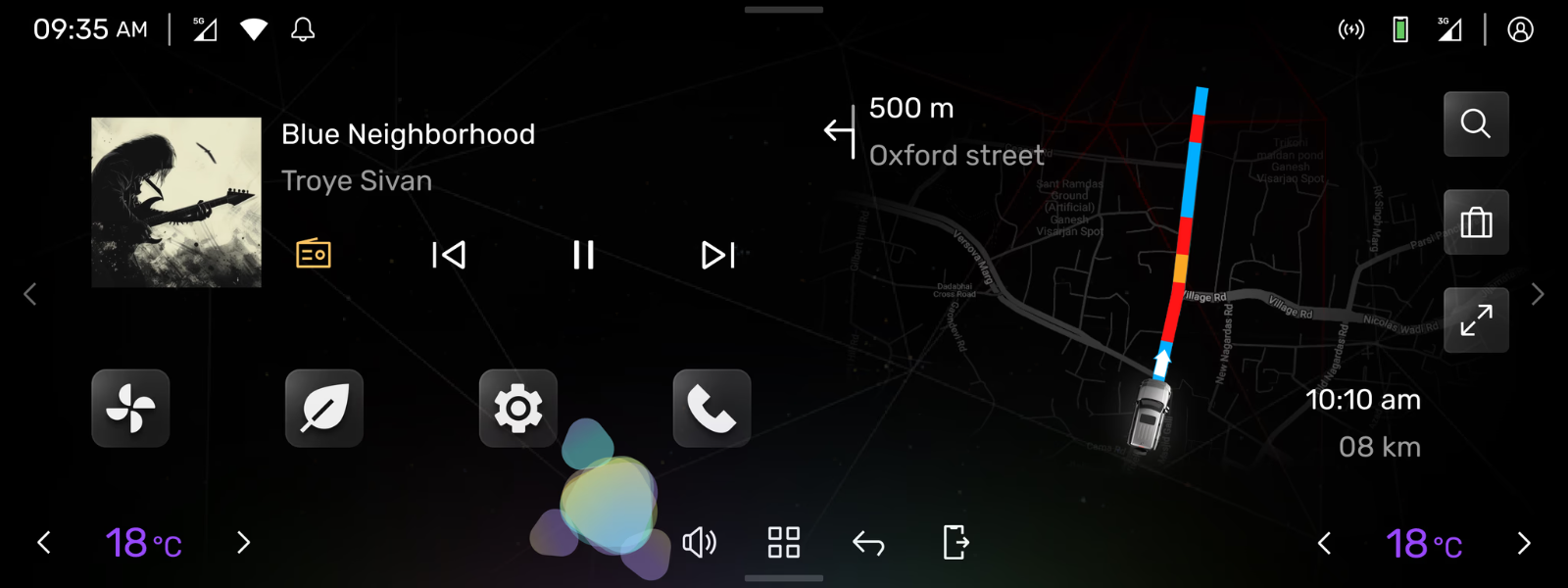
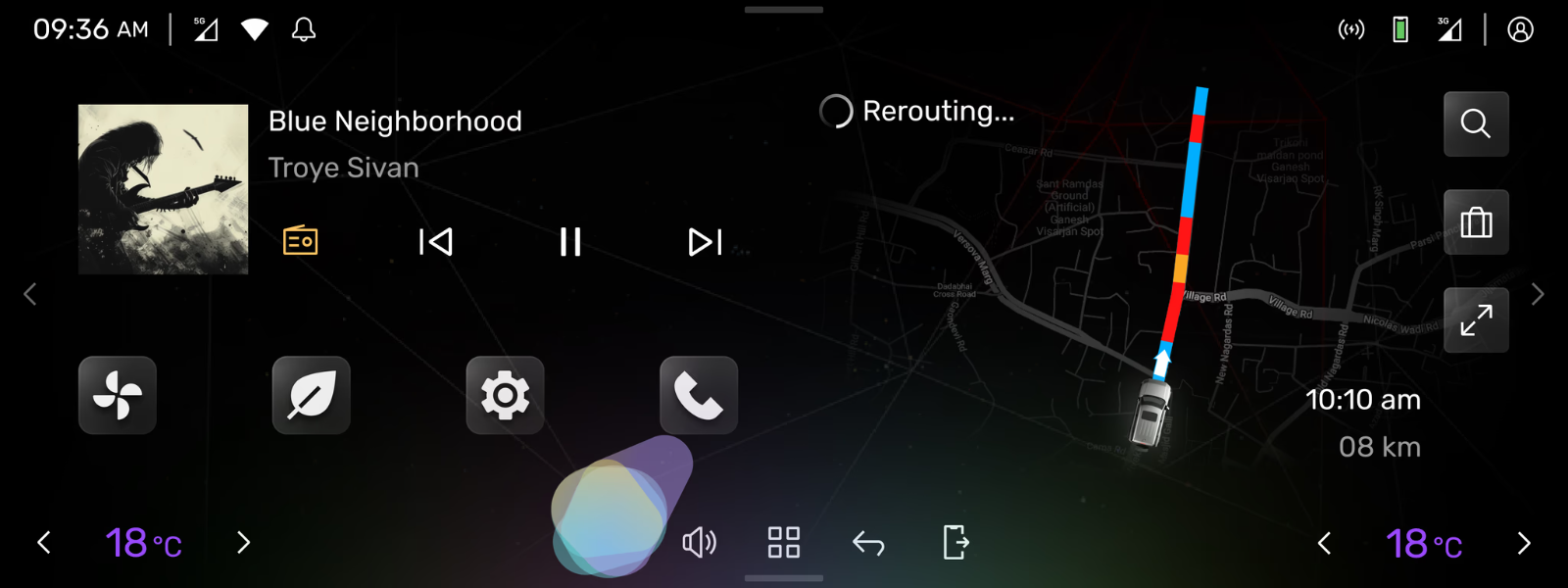
One narrative, many states.
A state-aware interface continuously adapts , from listening to navigating , making behaviour transparent and predictable while minimising cognitive load.
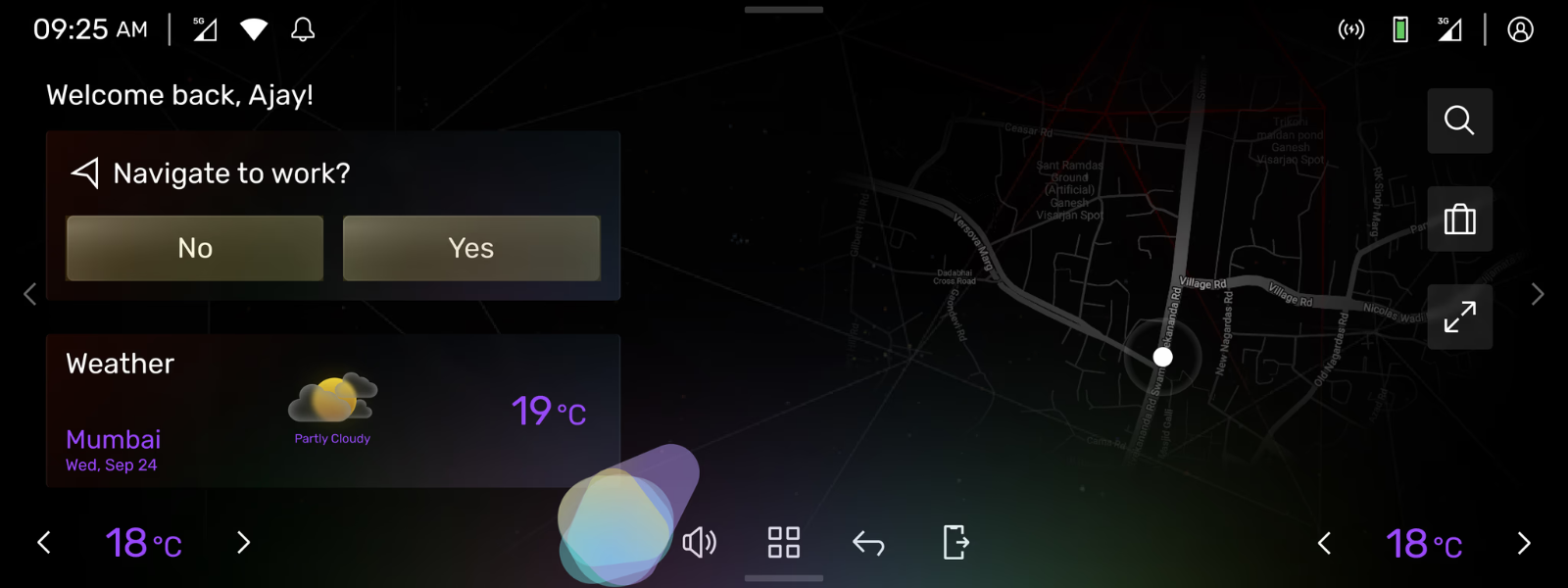
Navigating to work
Ambient feedback and progressive disclosure keep the driver informed and in control , a high-trust, low-effort experience.
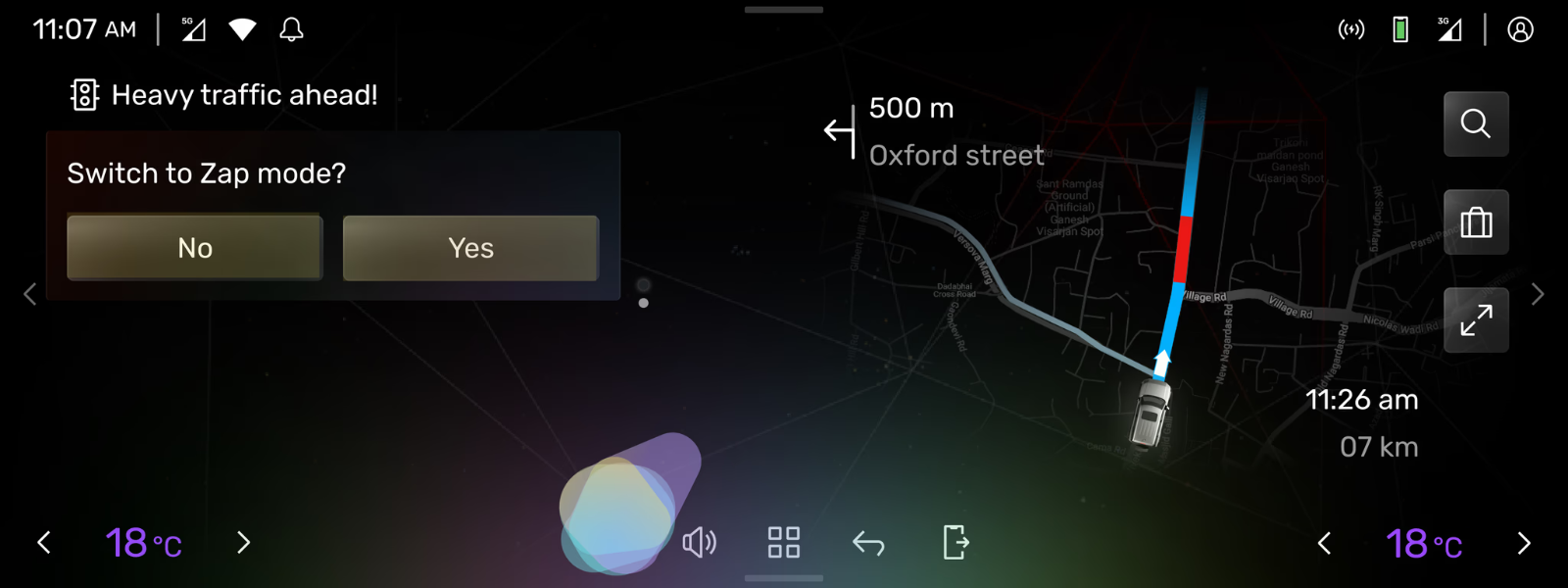
Heavy traffic
Proactive decision support and adaptive guidance , confidence-based prompts and quick yes/no actions turn a stressful situation into a controlled one.
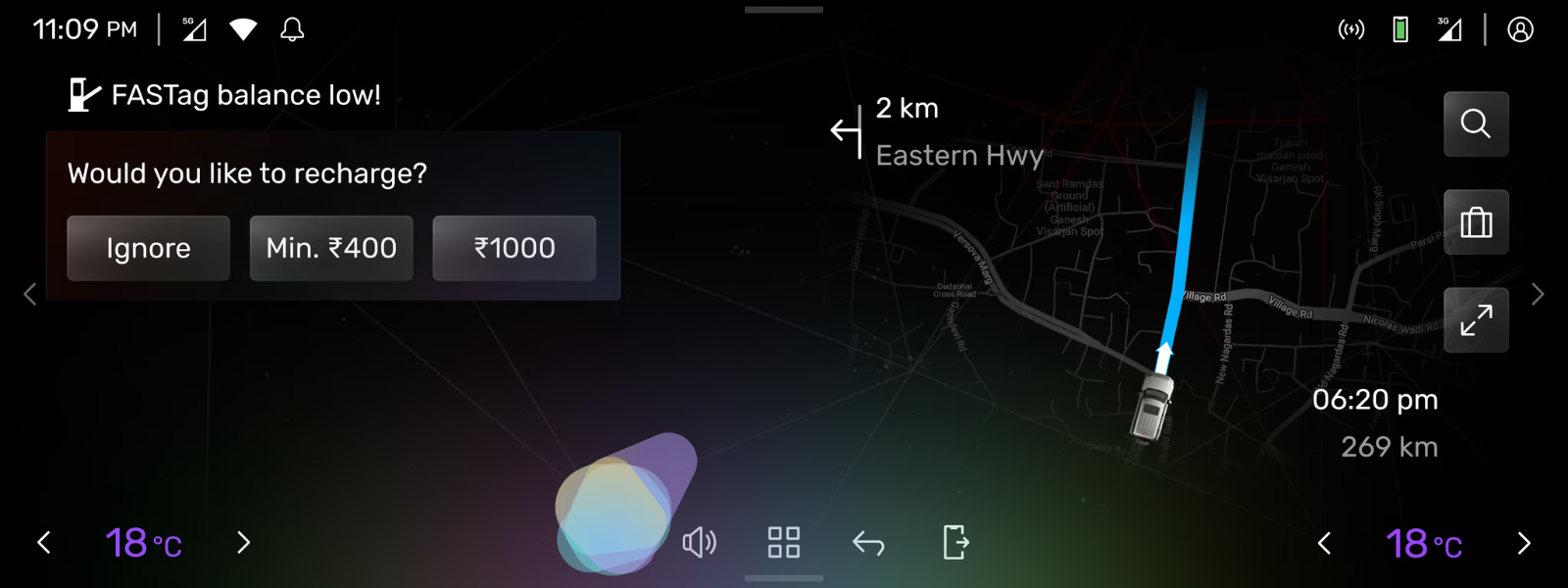
Approaching a toll booth
Anticipatory automation detects the toll in advance and prepares payment , frictionless confirmation minimises interaction at a critical moment.
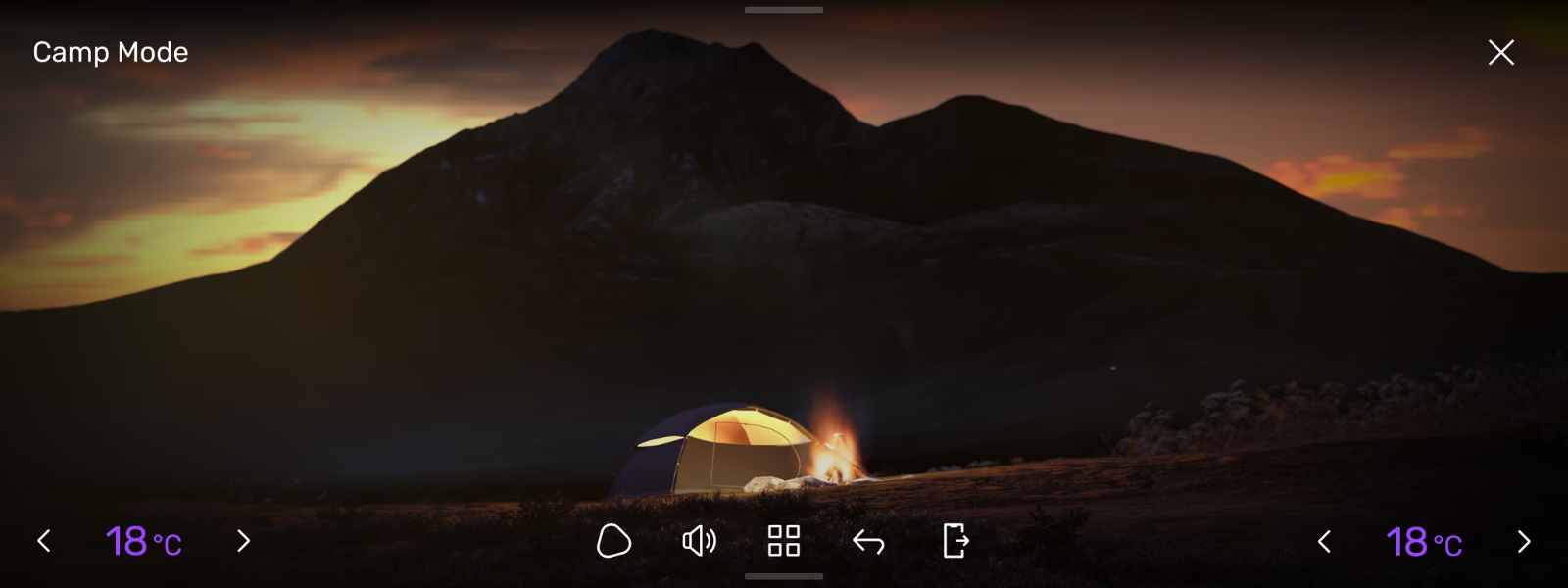
Camp mode
The vehicle as companion , MAIA adapts from active assistance to an ambient, restful presence.
Why the expressive orb didn't make the cut.
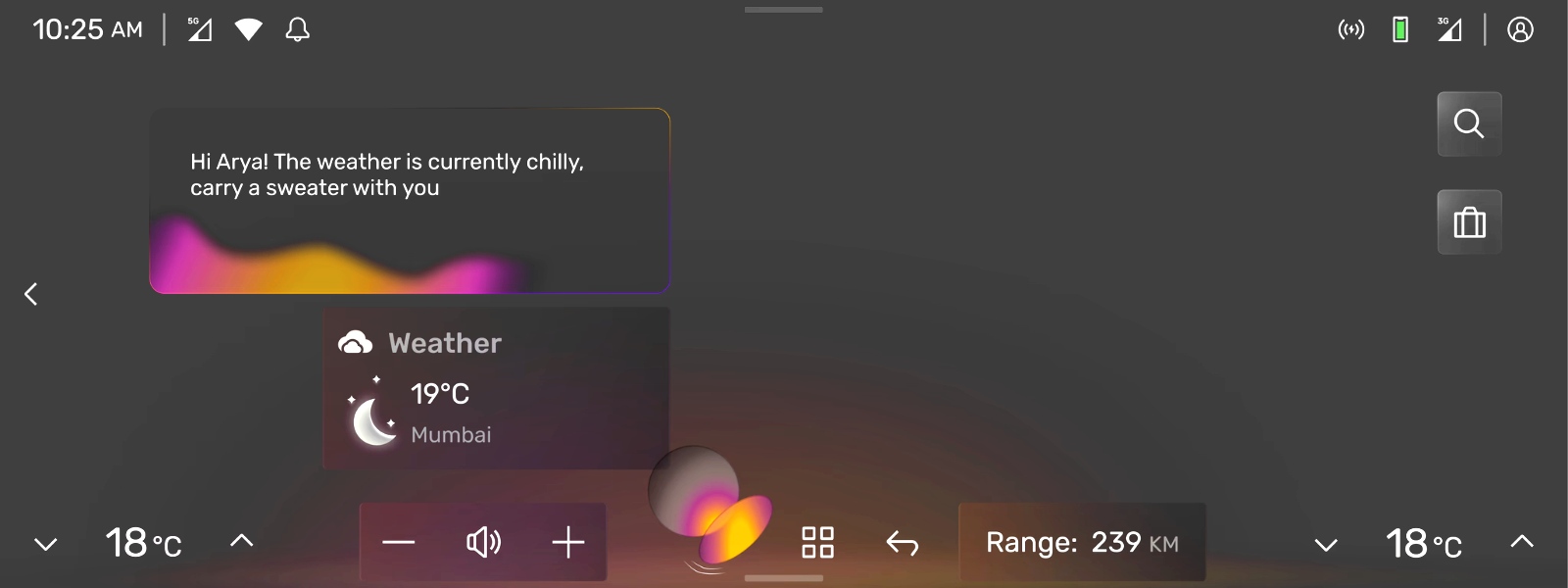
Iteration 1 · Orb agent. Expressive, but it lacked precision for high-stakes driving , users couldn't always tell what the system was doing, and it competed with primary navigation. More aesthetic than functional.
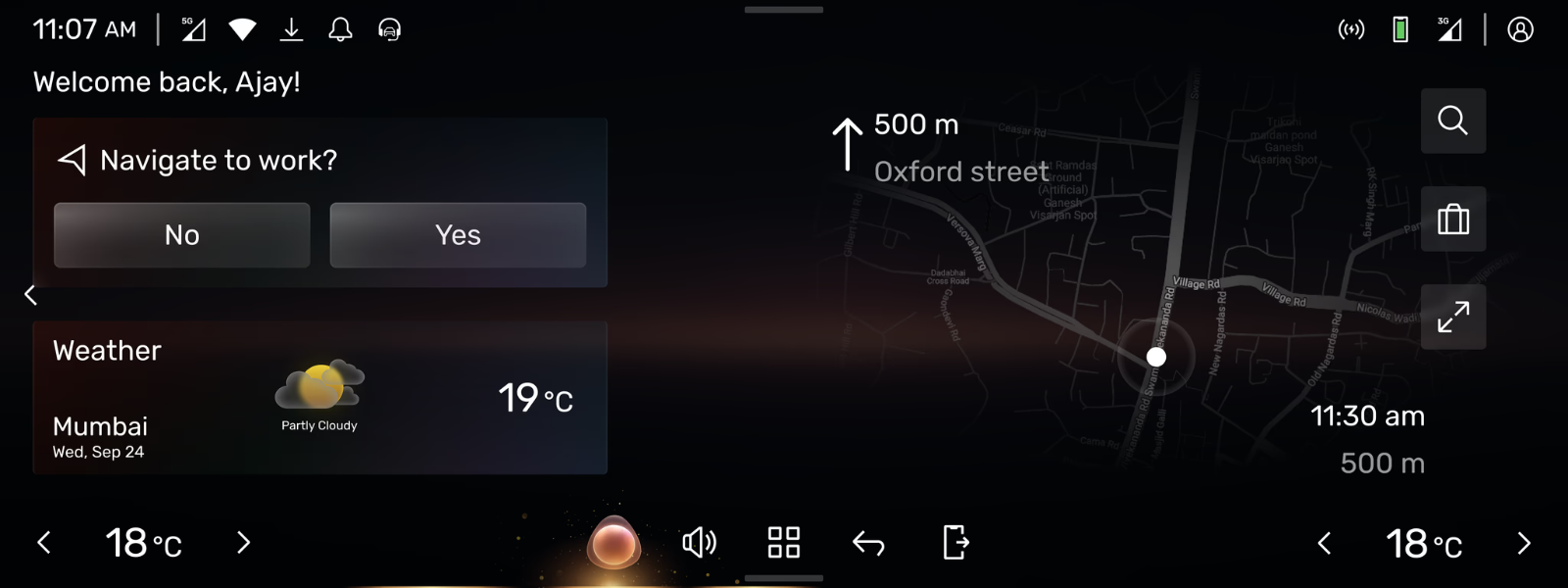
Iteration 2 · Ambient bottom agent. A soft gradient that shifts across states , warm/bright when active, cool/muted when passive , making state changes perceivable without text, integrated into the environment.
The best intelligence in a car is the kind you never have to go looking for.
MAIA shifted the question from "what can this system do?" to "what does this moment need?" , proving that the most advanced interface is often the one that asks the least of you.