Mobility is designed for independence, but for ageing individuals, independence is rarely individual.
As people grow older, movement is constrained not just by physical ability, but by confidence, cognitive load, and growing reliance on family. Existing systems optimise for speed and efficiency, while older adults navigate uncertainty, fragmented support, and a shrinking "life space."
Sarthi rethinks mobility not as a solo activity, but as a shared system between seniors and their families, balancing autonomy with support, and safety with dignity. The outcome lets older adults move confidently through their world while staying meaningfully connected to those who care for them.
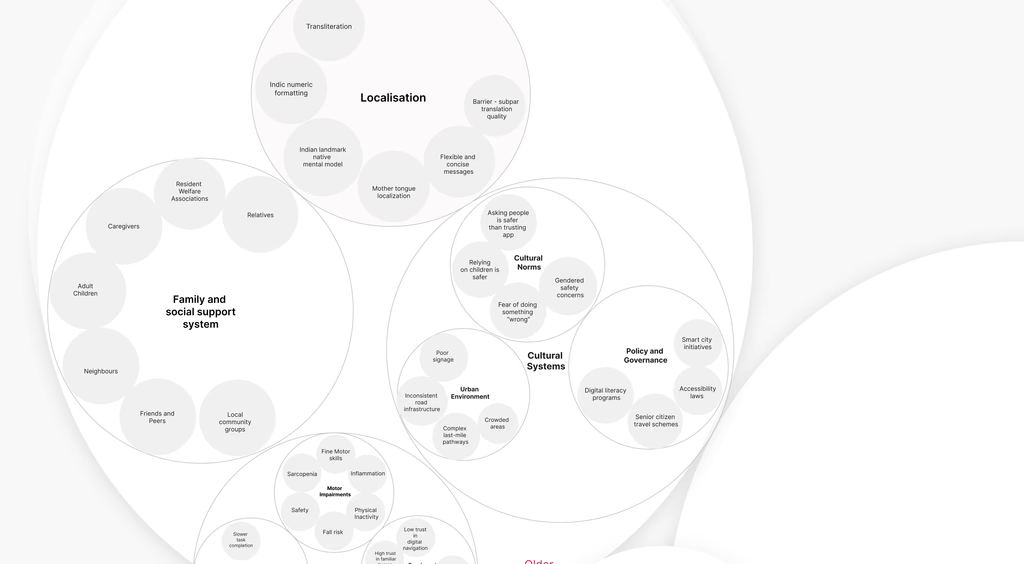
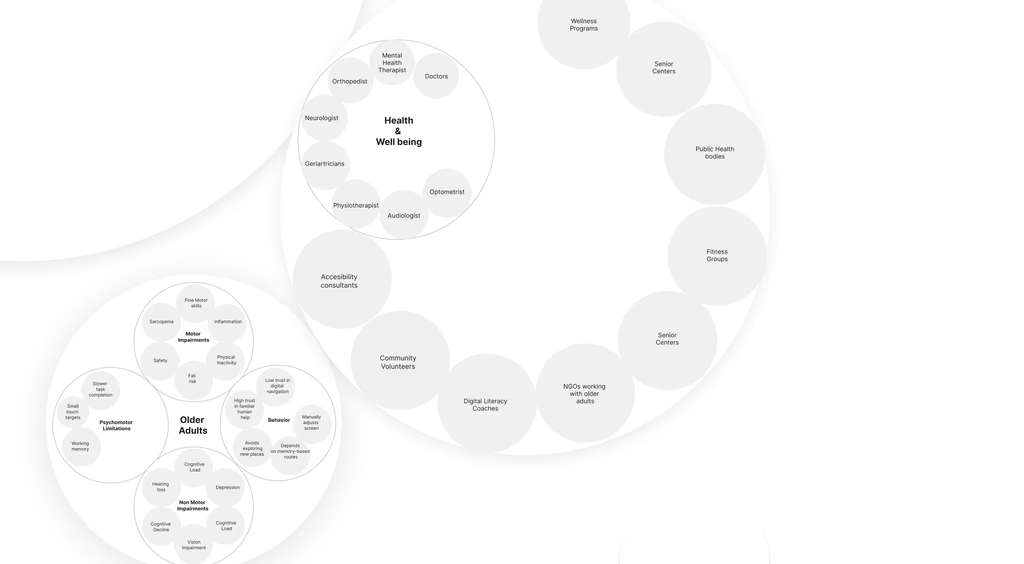
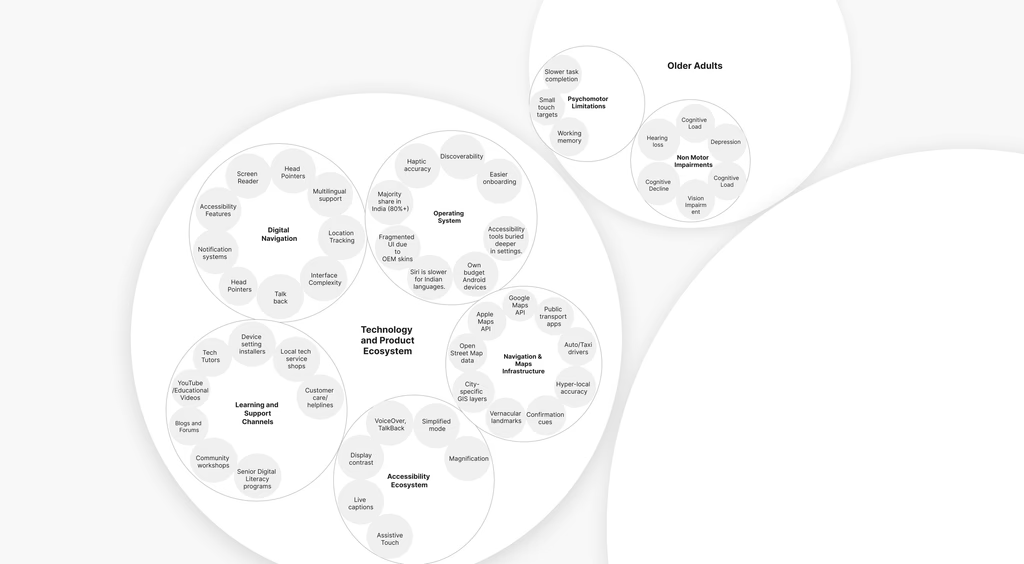
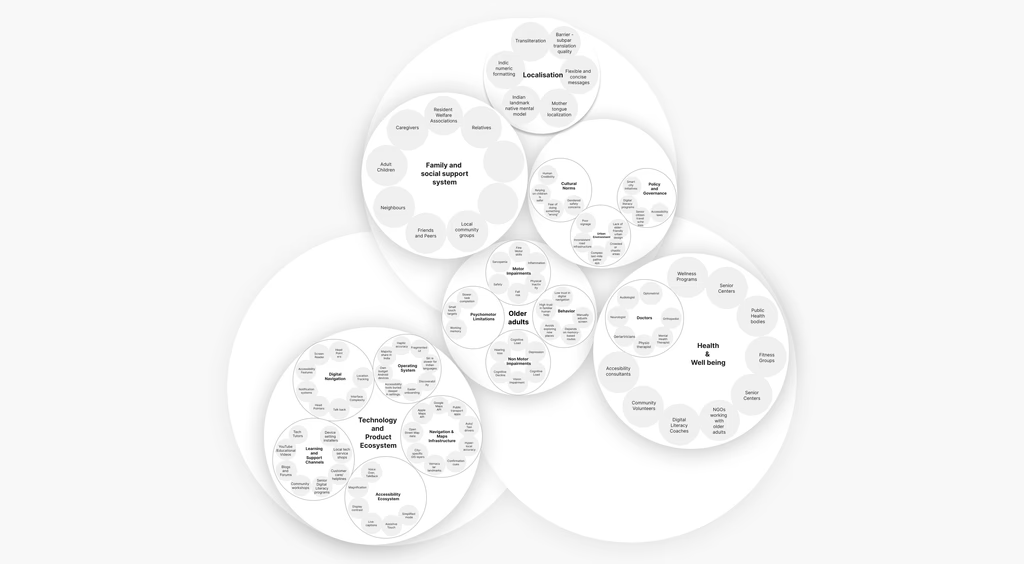
Mapping mobility as a network, not a line.
Seniors, families, services, and environment, and the dependencies and decision gaps between them.
Expand, frame, enable.
Map the whole ecosystem
Moved beyond the individual to map mobility as a shared ecosystem of seniors, families, and services, revealing hidden dependencies and decision gaps.
Reframe to "life space"
Shifted mobility from task completion to life space, measuring how far individuals can move with confidence, not just capability.
Adaptive, non-intrusive support
Built solutions that balance autonomy and support, where assistance is adaptive, non-intrusive, and activated only when needed.
Four systems working as one.
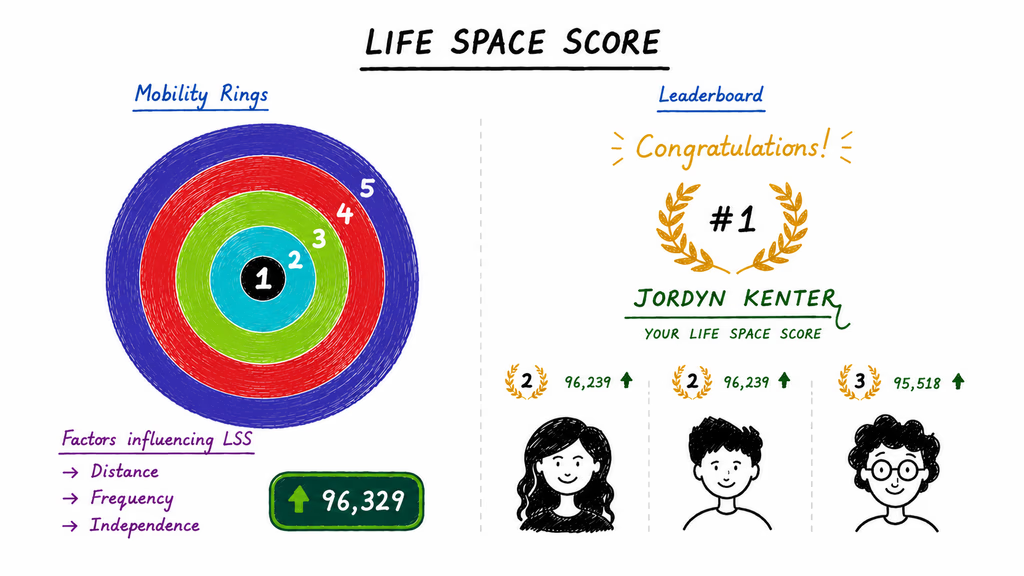
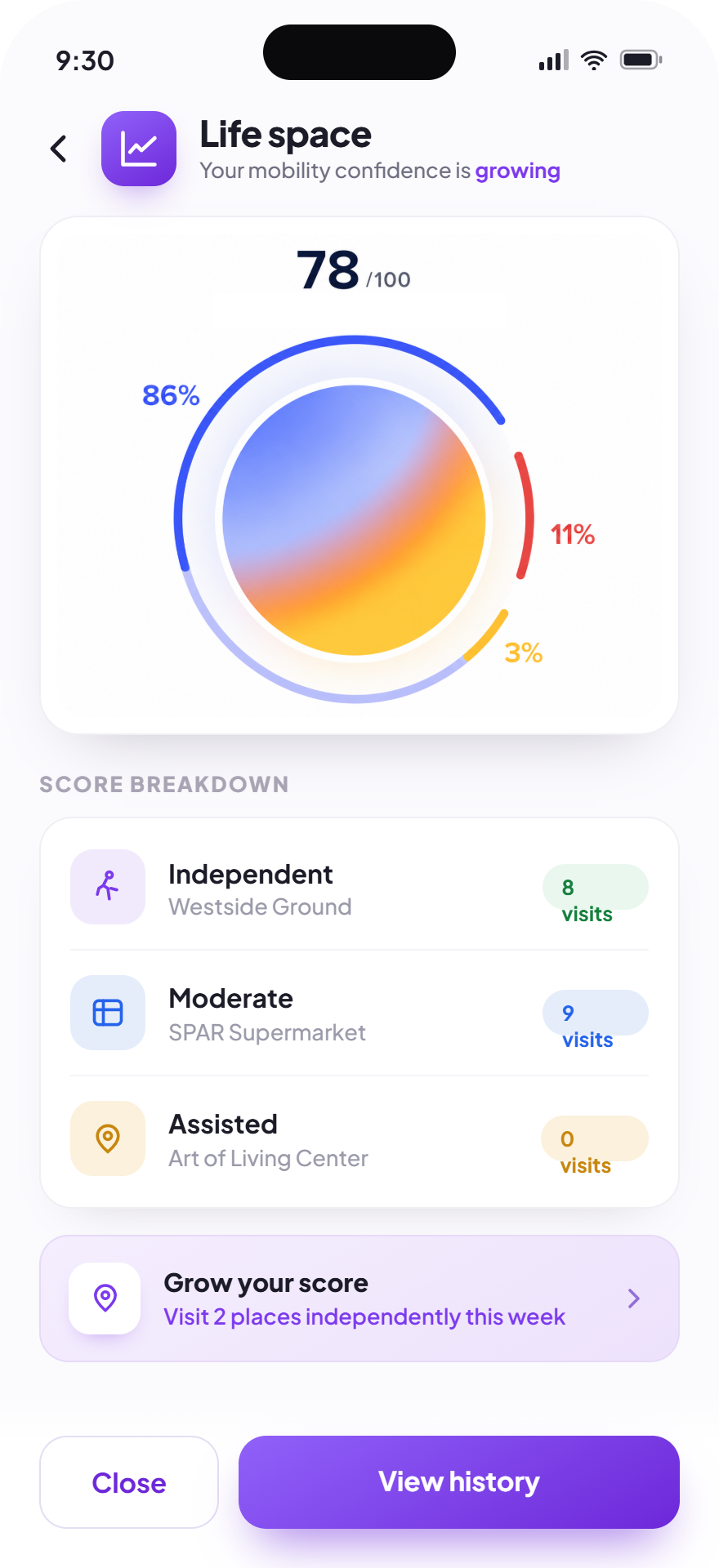
Life-Space Score
A dynamic indicator of how confidently a user can navigate their environment, factoring in distance, familiarity, and assistance required.
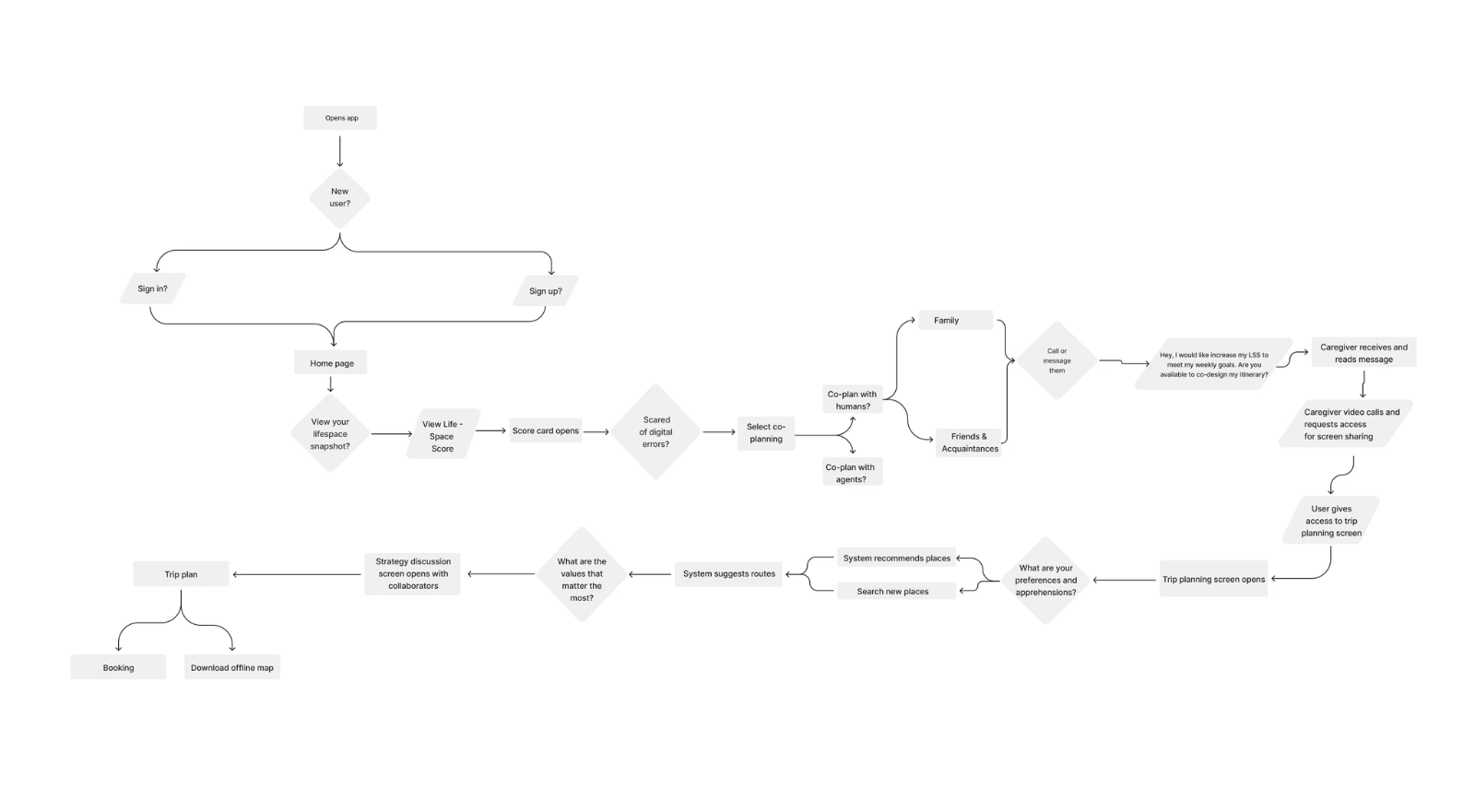
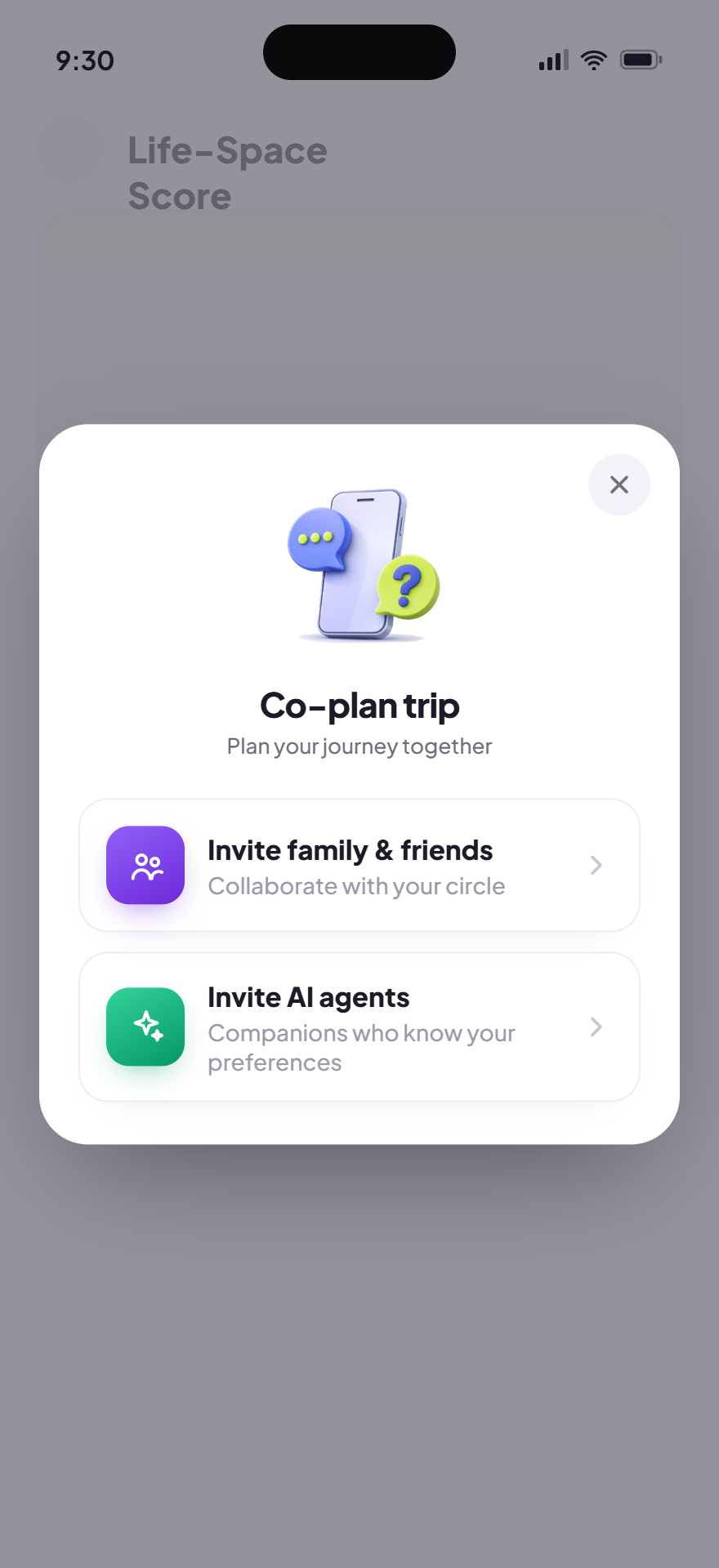
Collaborative trip planning
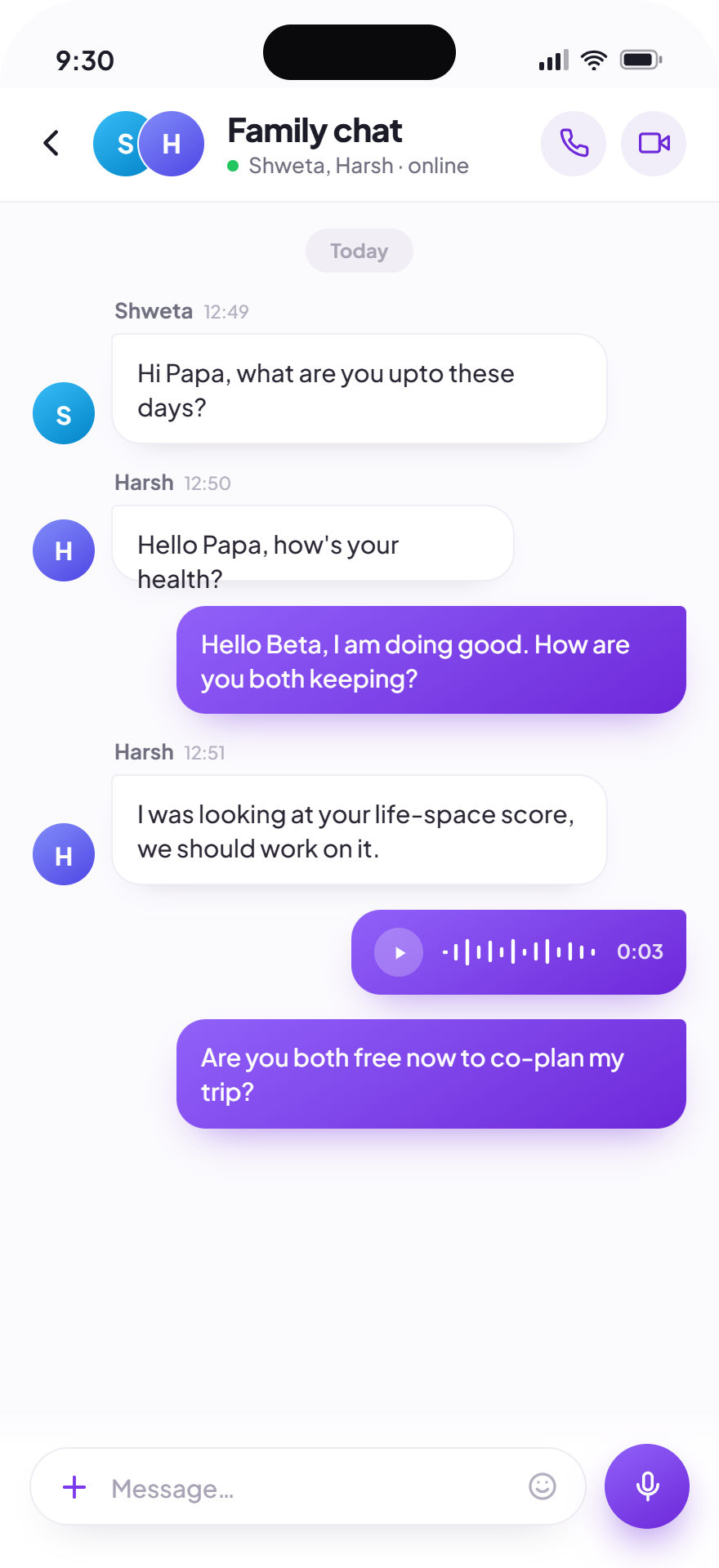
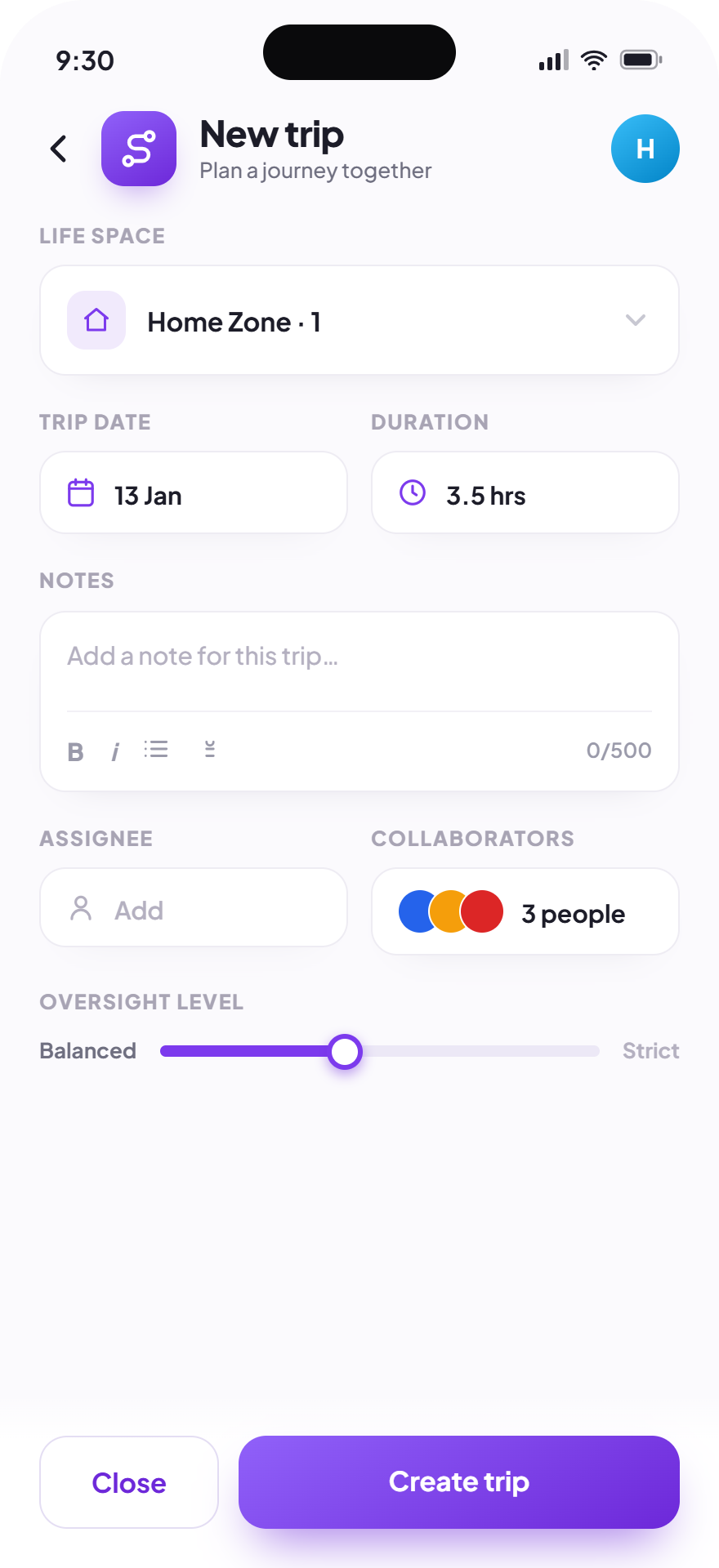
Seniors and family co-plan journeys with shared visibility, inputs, and approvals.
Adaptive assistance layer
Context-aware support that activates only when needed, guidance, alerts, or intervention based on user state and journey complexity.
Connected safety net
A passive monitoring layer that keeps families informed without intrusion, live updates, checkpoints, and escalation triggers.
Three relationships with independence.
The Independent Navigator
Values autonomy and routine. Travels within familiar zones and prefers not to rely on others unless absolutely necessary.
The Supported Explorer
Wants to stay active and engaged, but operates with partial dependence, often coordinating with family for planning and reassurance.
The Assisted Dependent
Relies significantly on external support. Travel is infrequent, high-stakes, and often anxiety-driven.
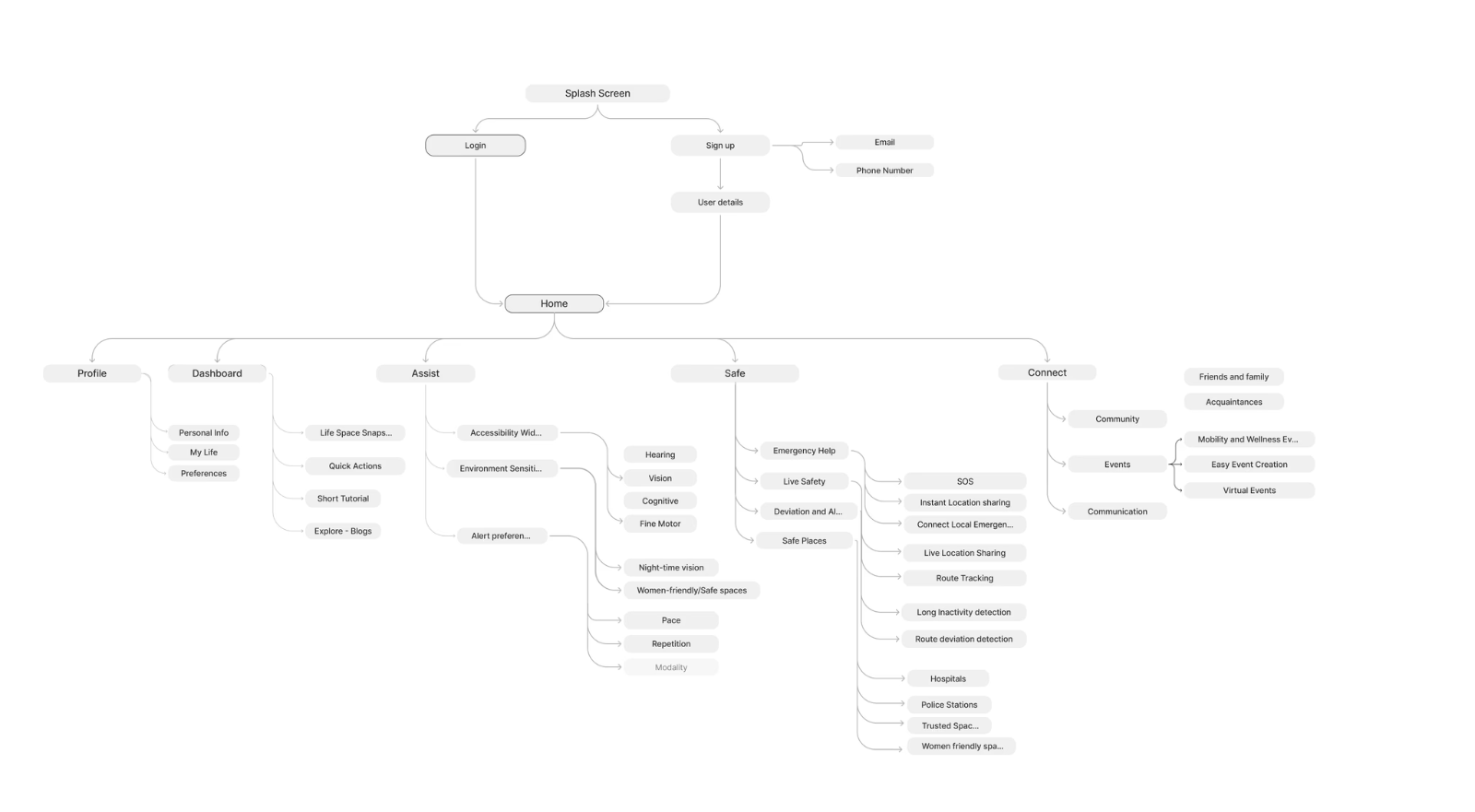
Structuring four concerns into one continuous layer.
Ideation
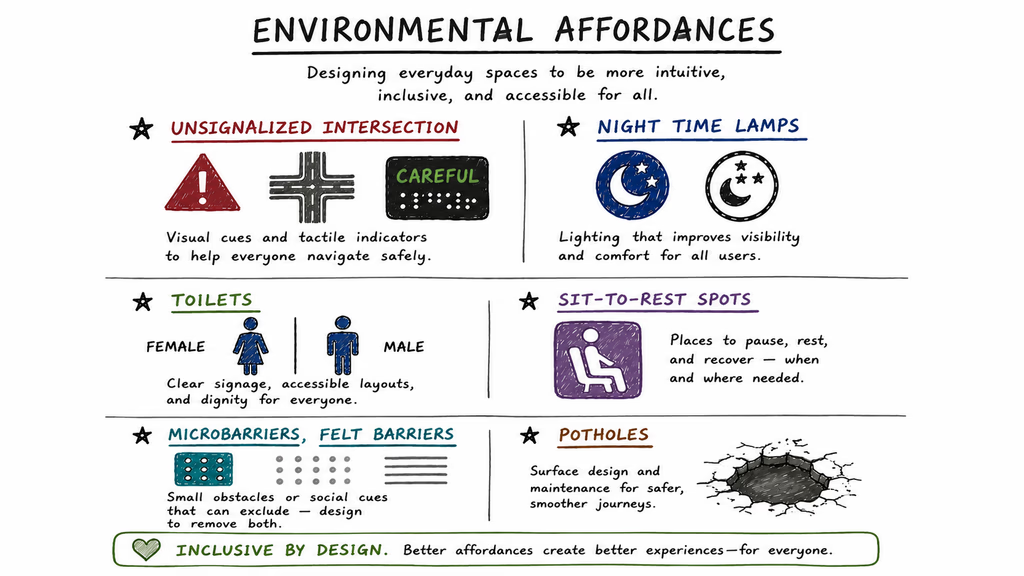
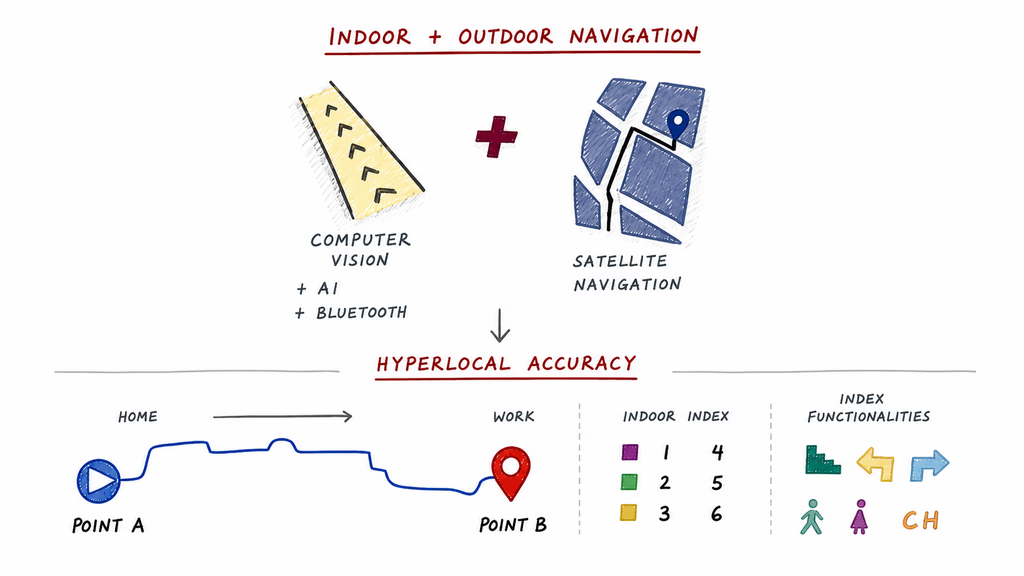
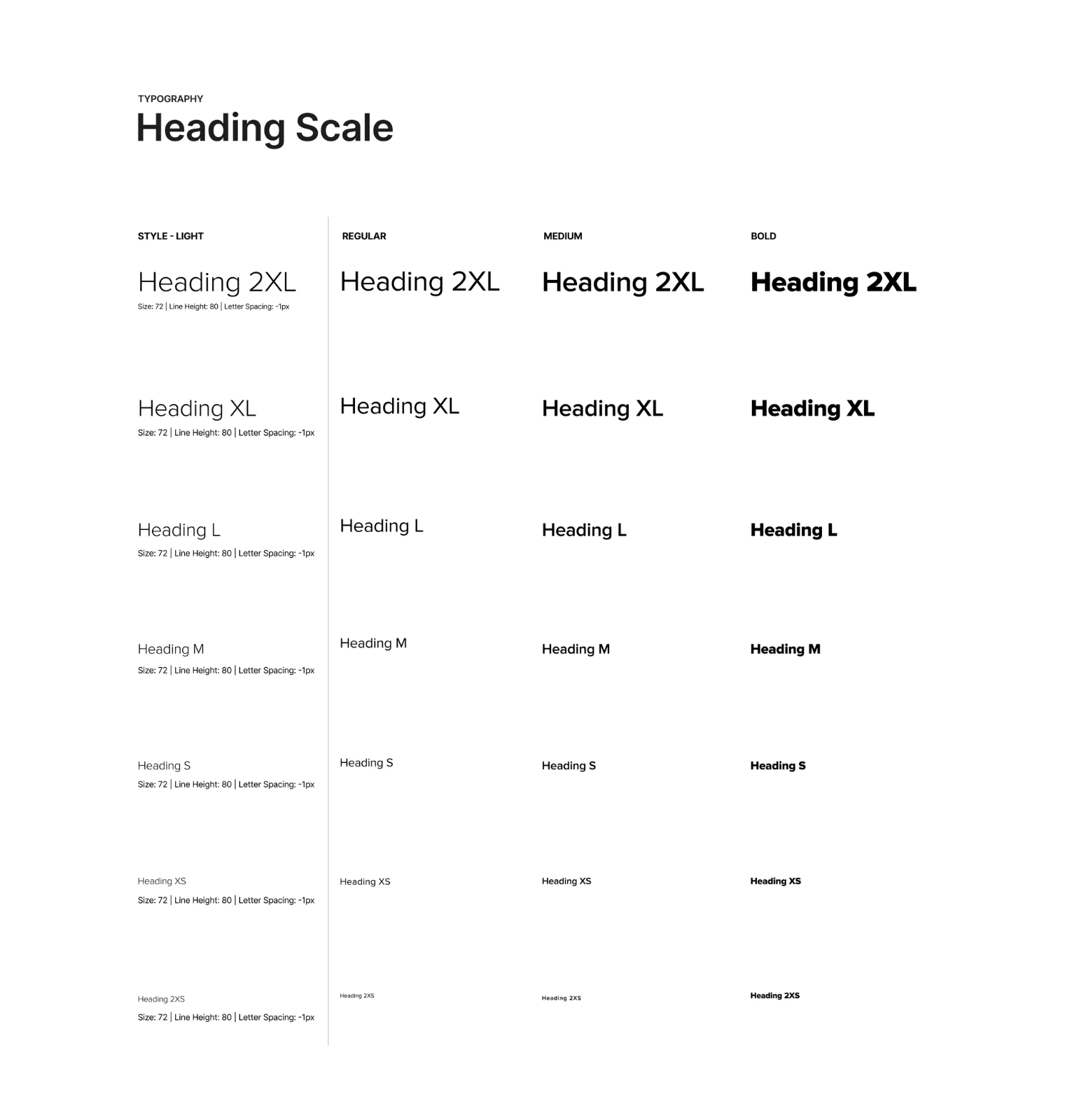
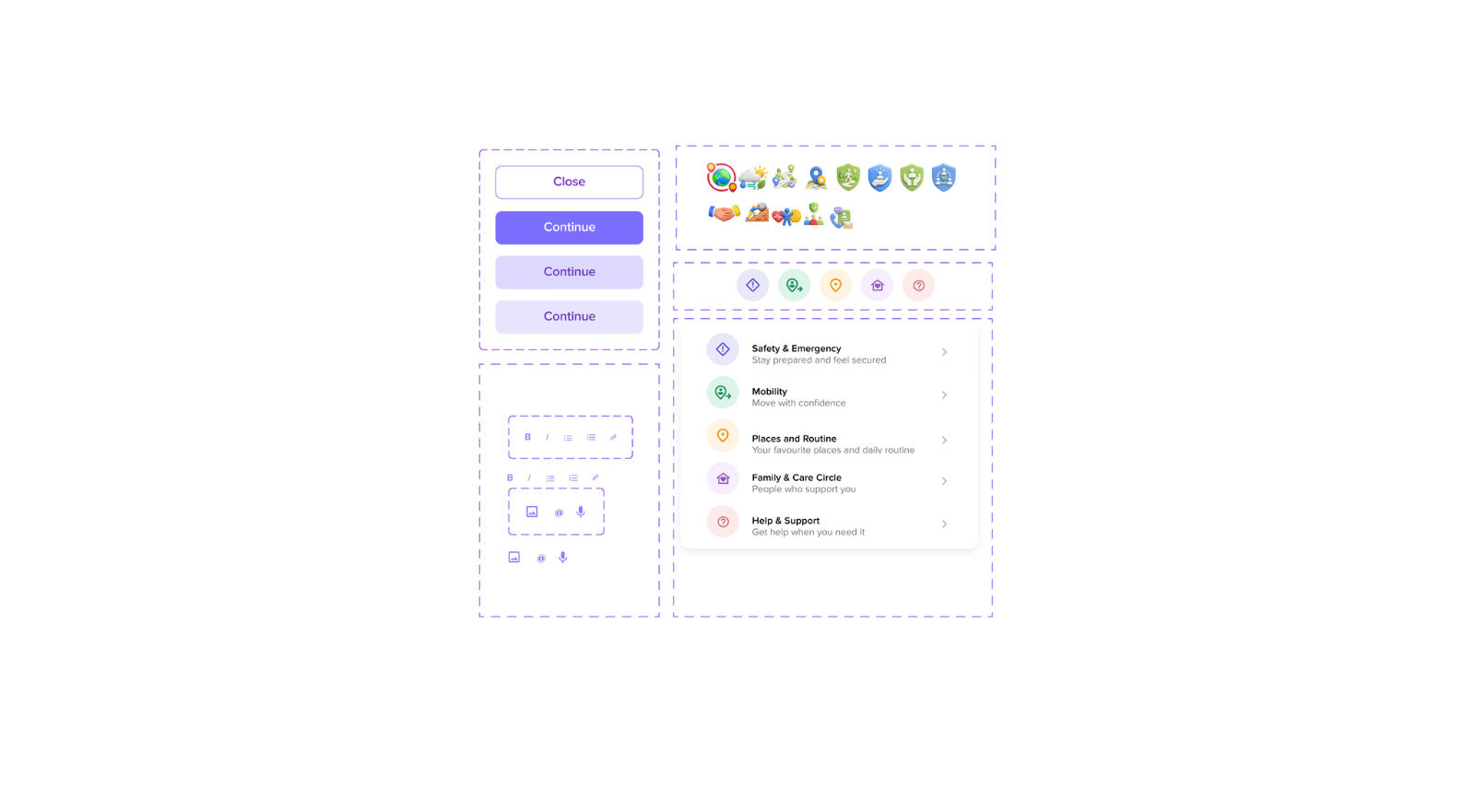
A system built on type, colour, and components.
Typography
Colors
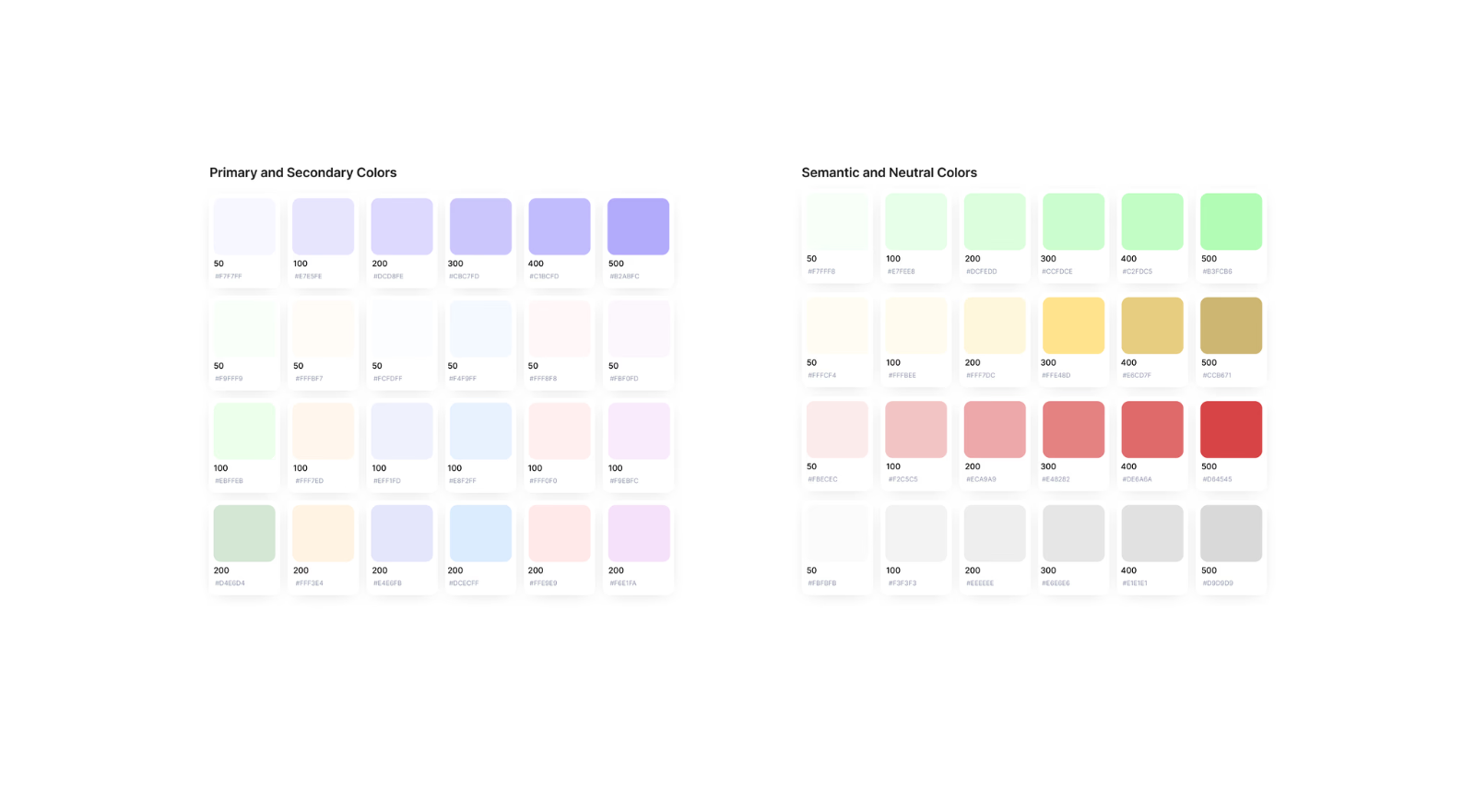
Components
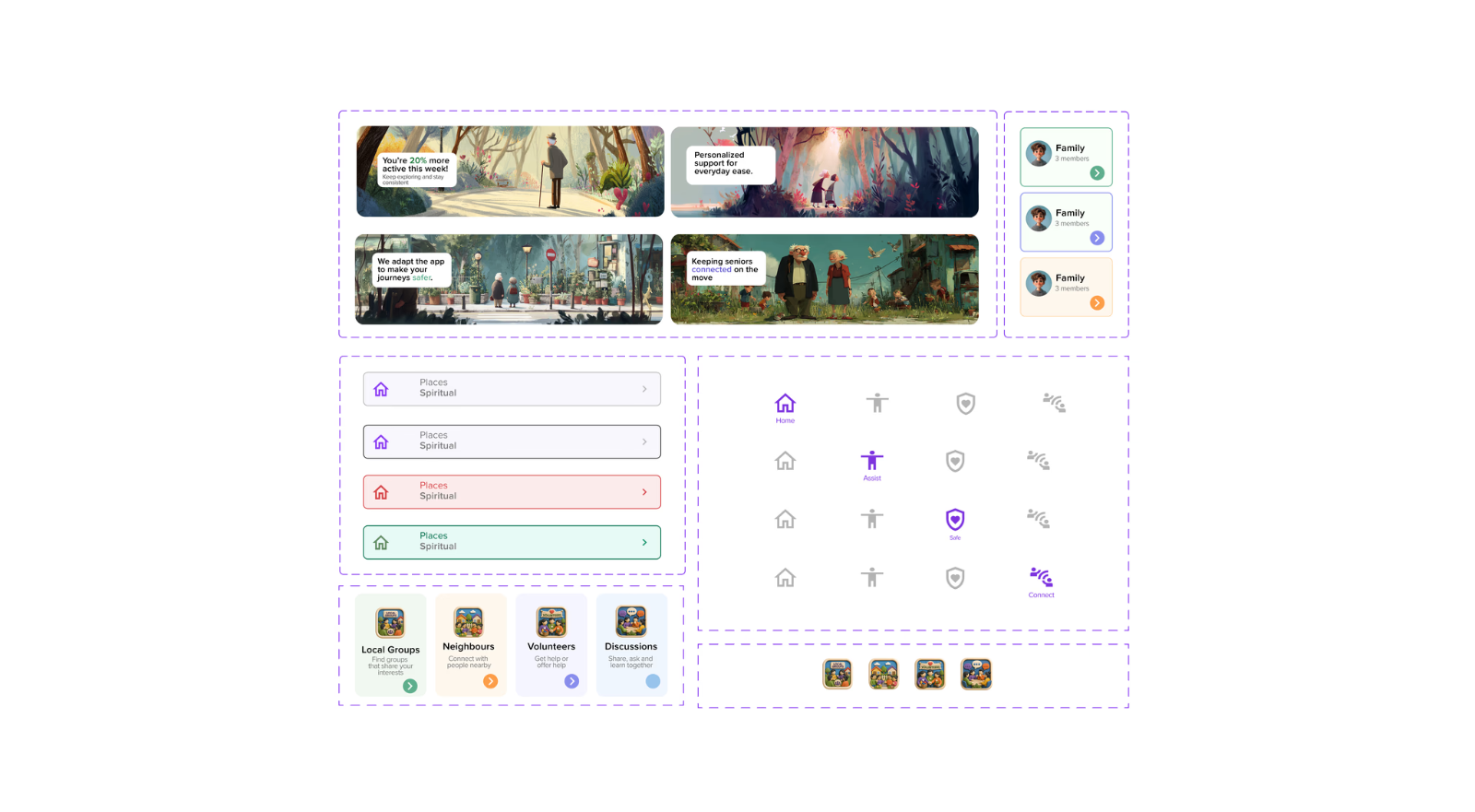
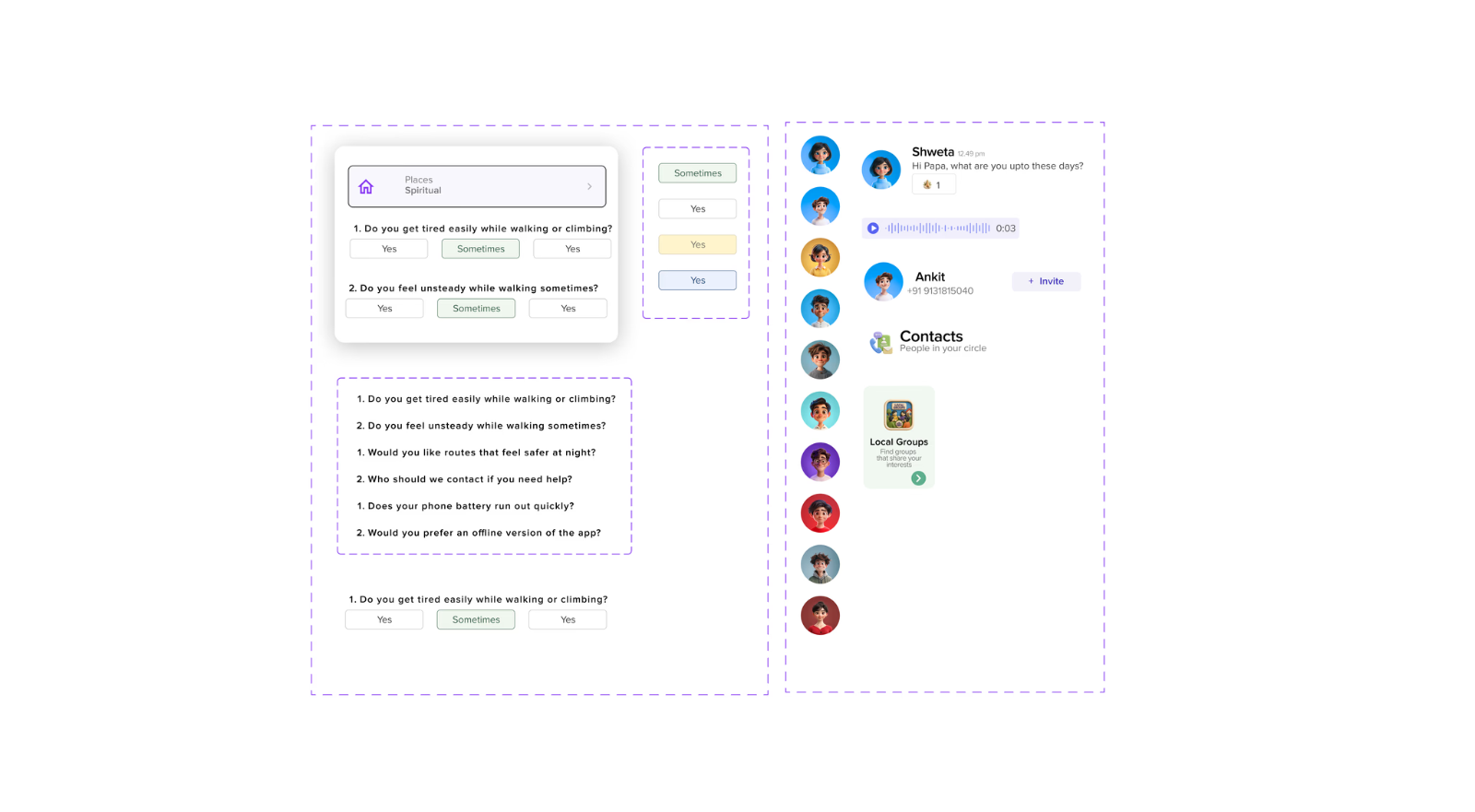
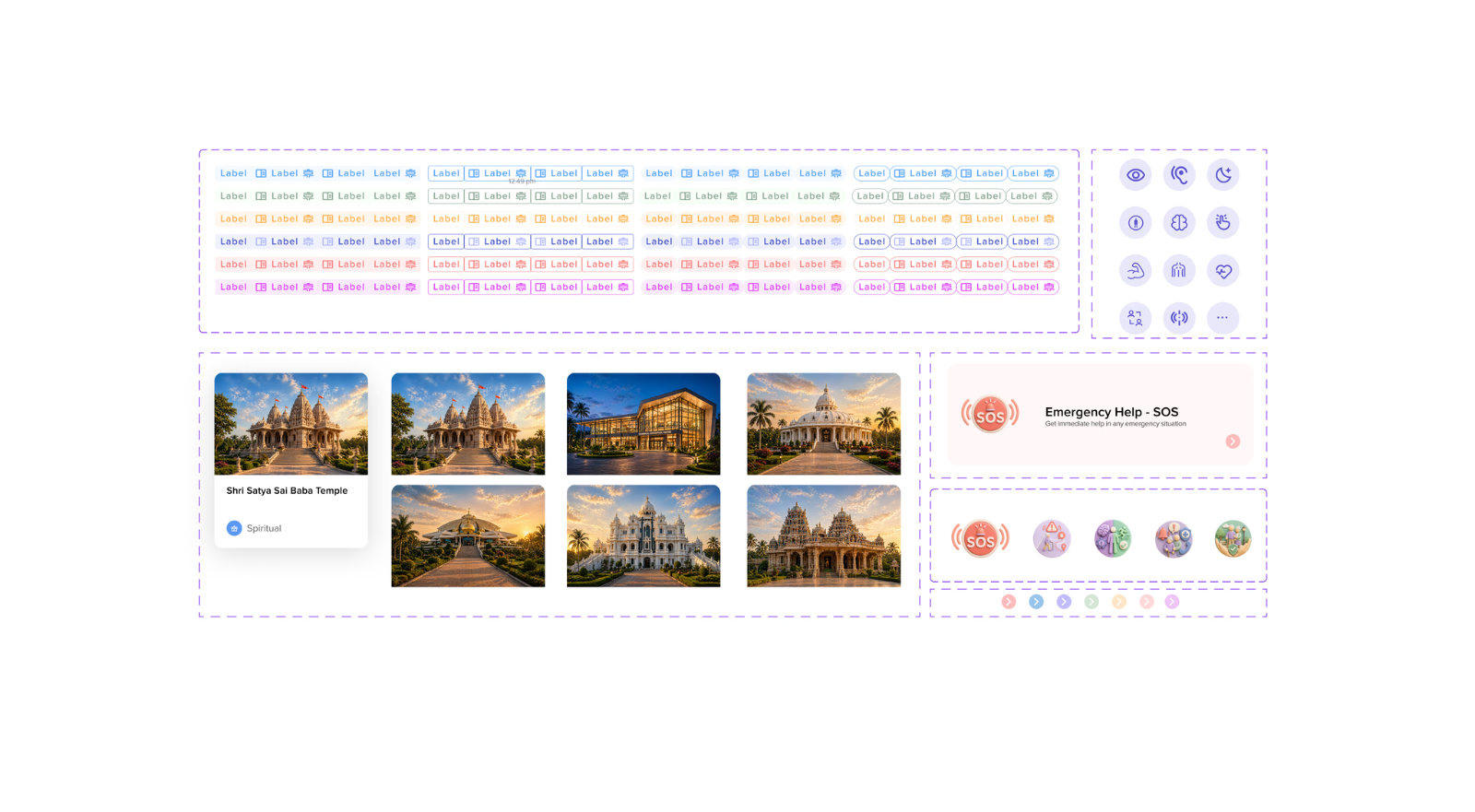
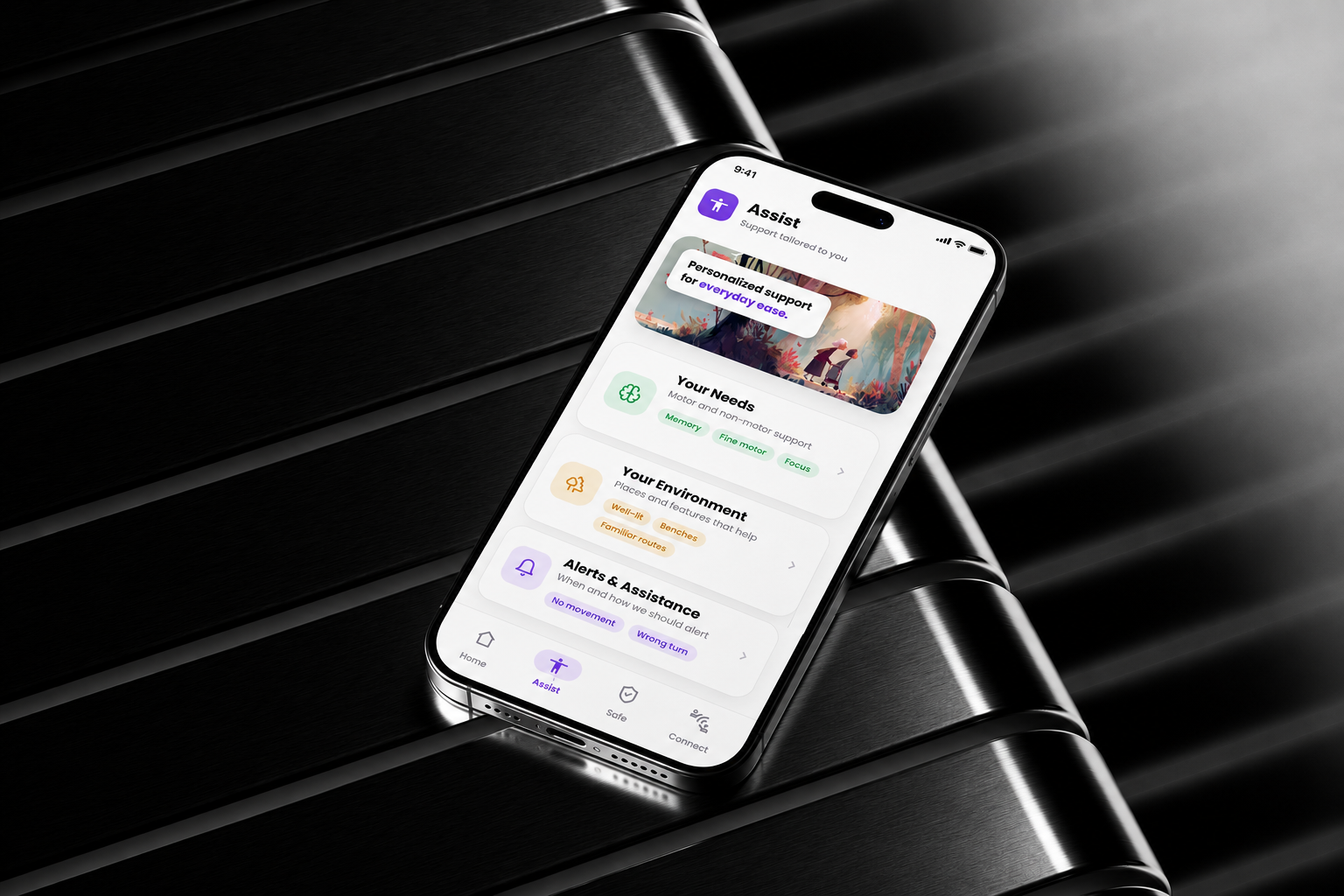
Home, Assist, Safe, Connect, one experience layer.
The core interface unifies four traditionally separate concerns, navigation, safety, assistance, and social connection, into a single, continuous experience.
A cognitive anchor, "continue where you left off" and intent-driven actions reduce recall.
Externalises the invisible, user needs, environmental constraints, contextual alerts.
Reframes safety from a reactive SOS to a persistent layer of reassurance.
Integrates family and community as ambient participants, not active dependencies.
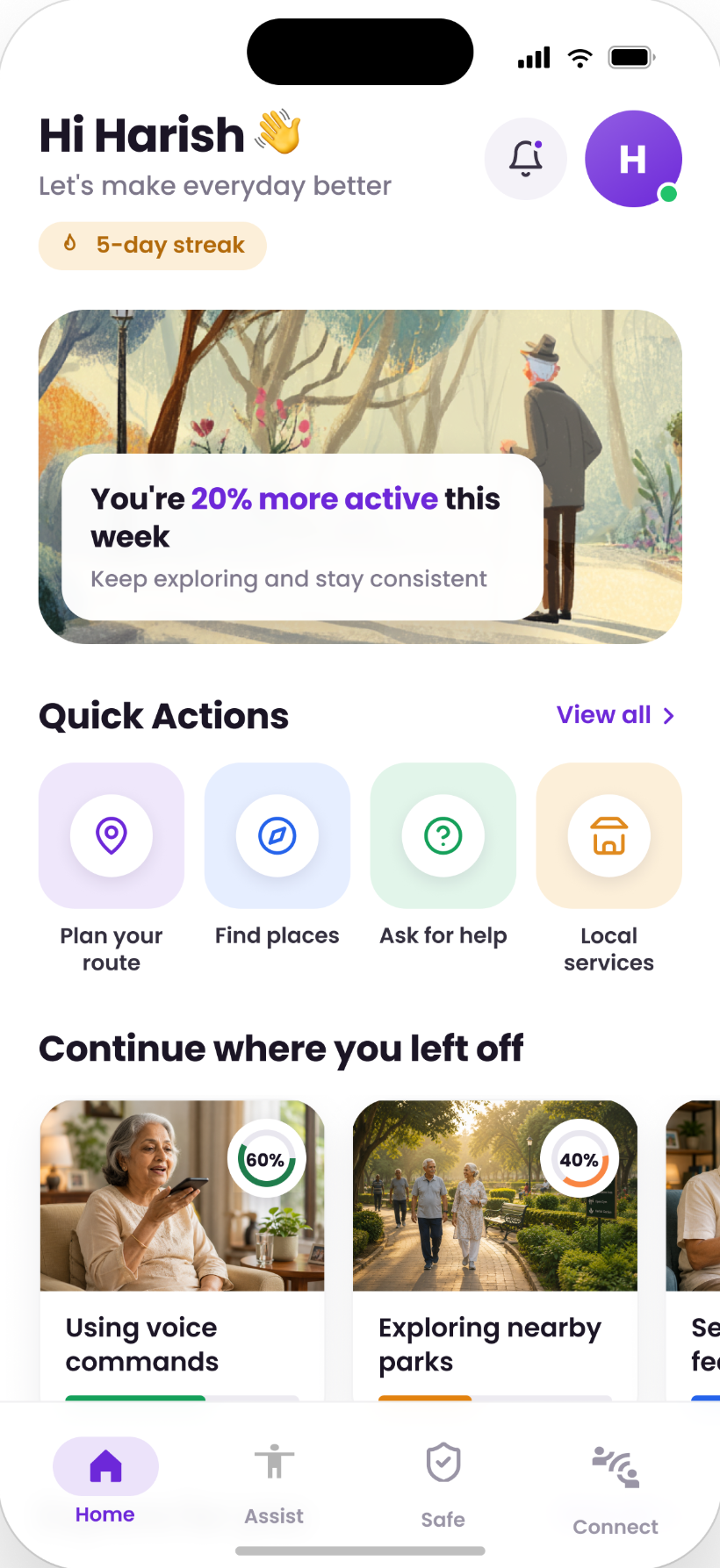
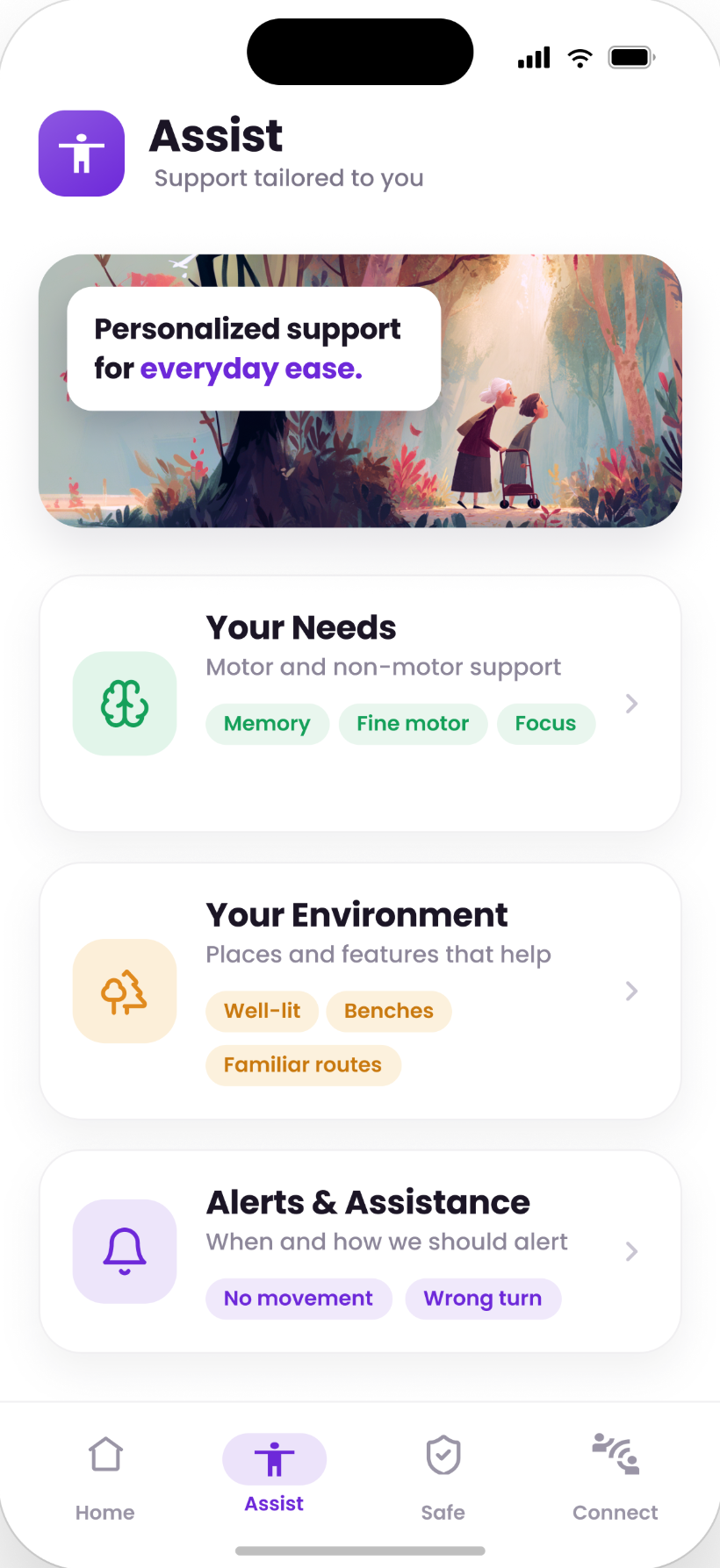
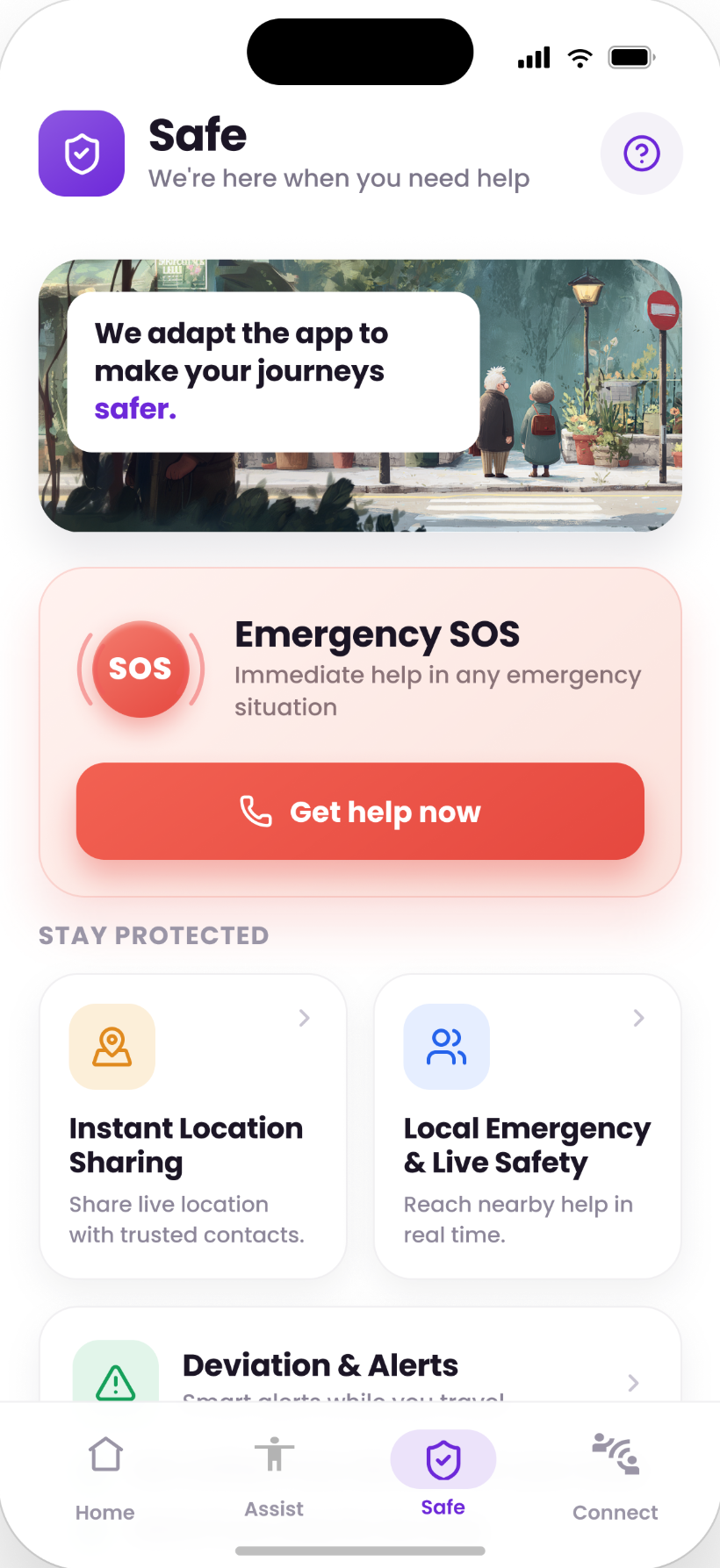
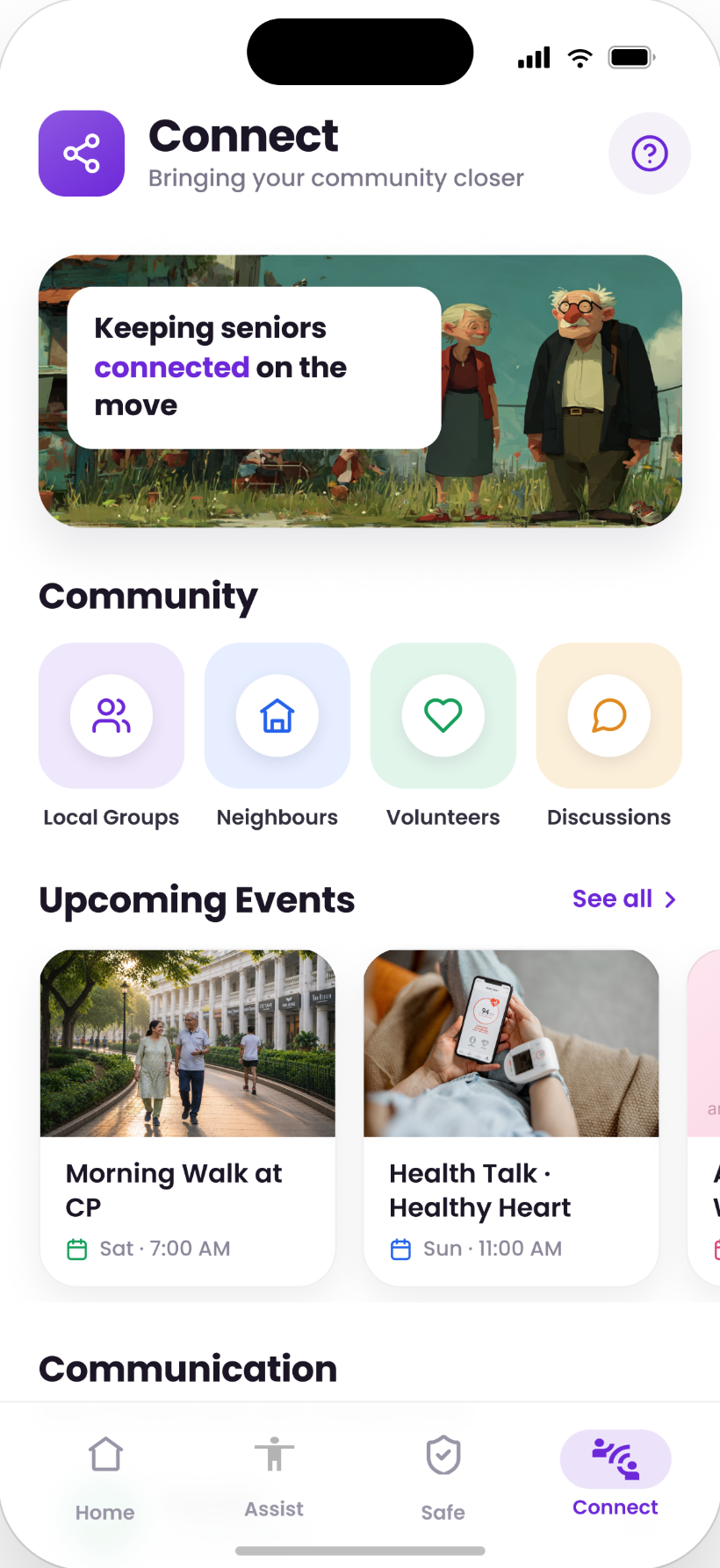
Rather than isolated features, I unified them into a state-based system where users move between confidence states, not screens, and the system continuously adapts based on context, behaviour, and risk.
The profile as a control surface, not a settings page.
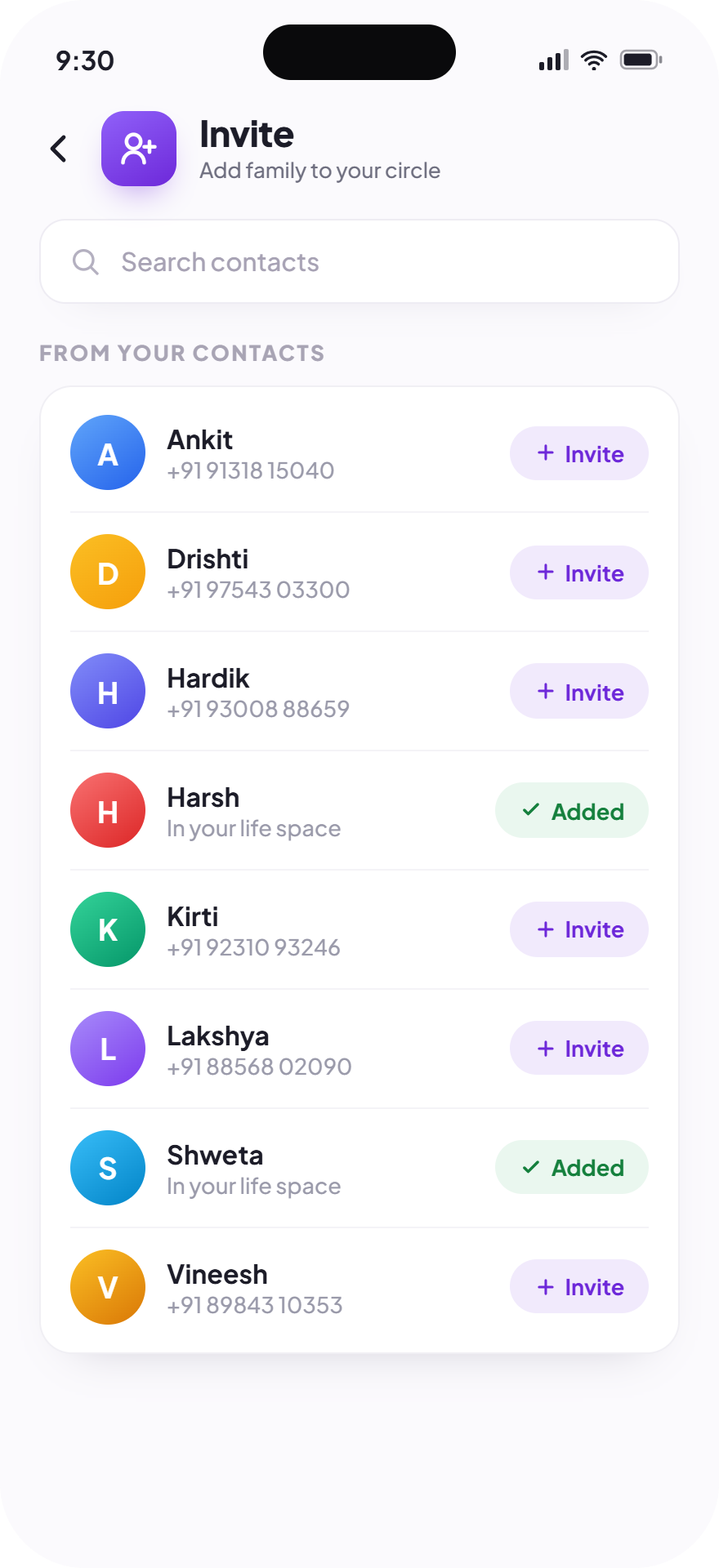
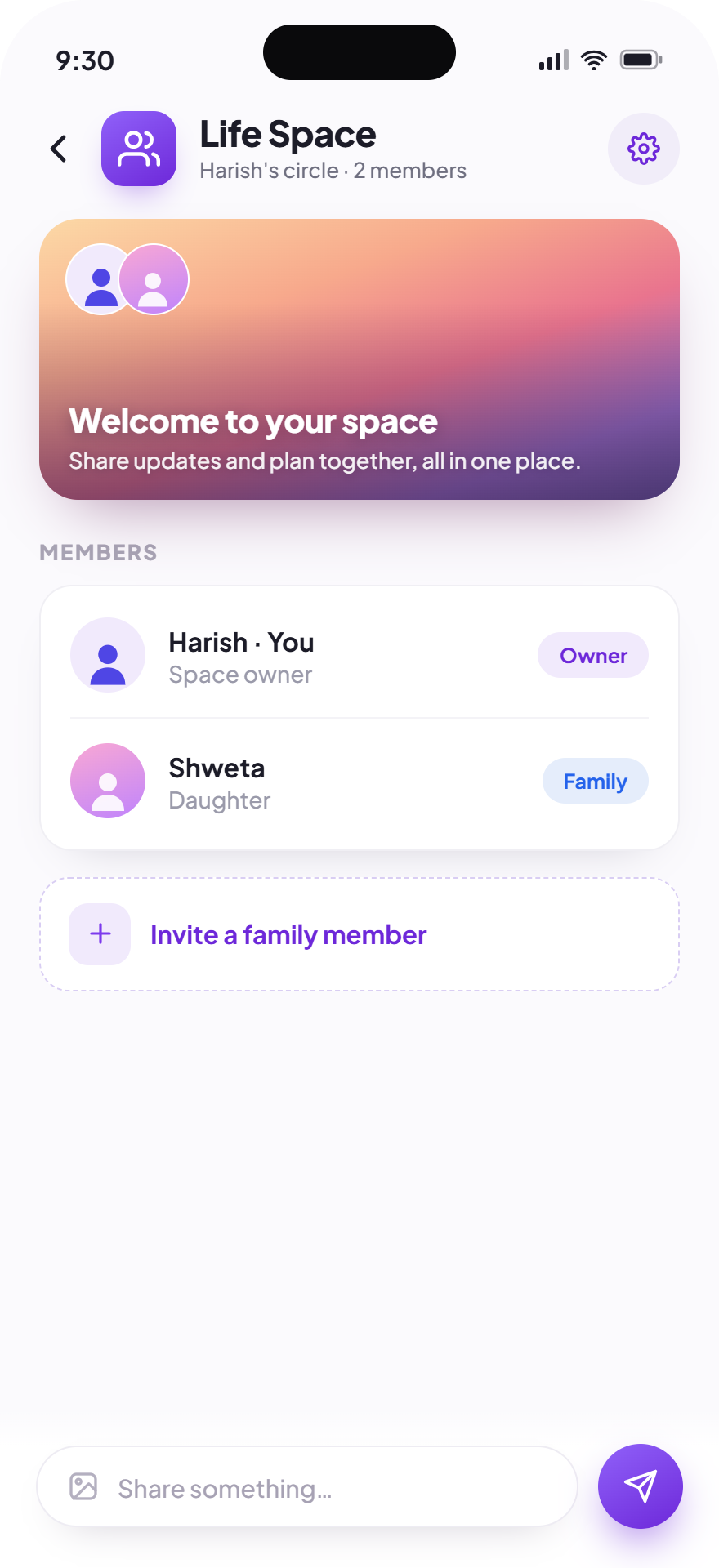
Profile, Family Circle, permissions, and Life-Space positioning, treated as a control surface for trust, identity, and shared responsibility.
- Family & Care Circles as distributed decision systems.
- Role-based permissions balancing visibility and autonomy.
- Life-Space Score as a reflection of lived mobility, not app usage.
I reframed identity from "user account" to "mobility context owner", where users define who participates in their journeys, control how and when support activates, and understand their mobility over time.
Onboarding as calibration, not setup.
Instead of asking "what features do you want?", the system learns how users perceive, decide, and respond under uncertainty, capturing the interplay of physical, cognitive, and behavioural factors.
I replaced static accessibility toggles with a multi-dimensional input model, conditions, behavioural patterns, and environmental sensitivity, so the system adapts interaction density, modality, and level of guidance.
The journey begins at the moment of decision.
This layer connects planning, execution, and reflection into a single loop that builds confidence over time.
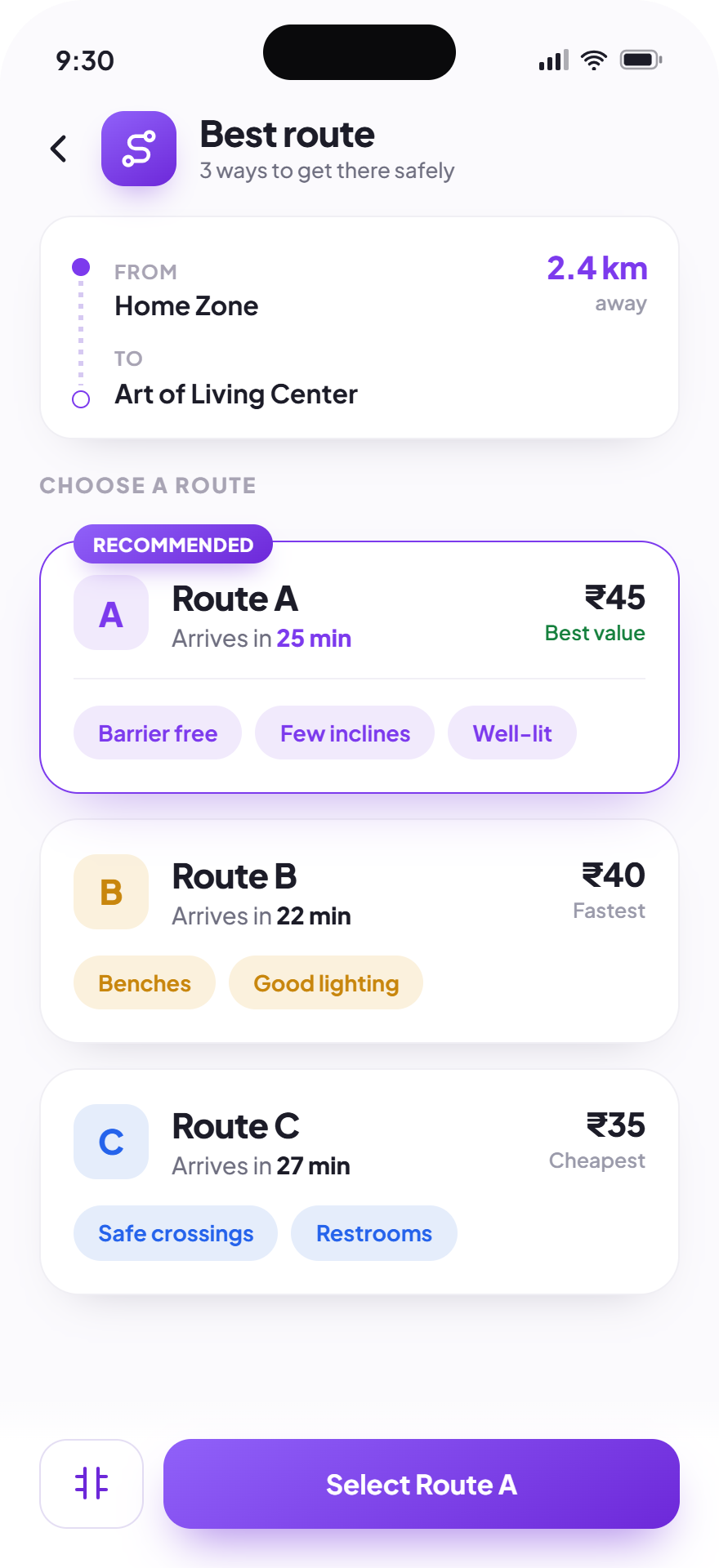
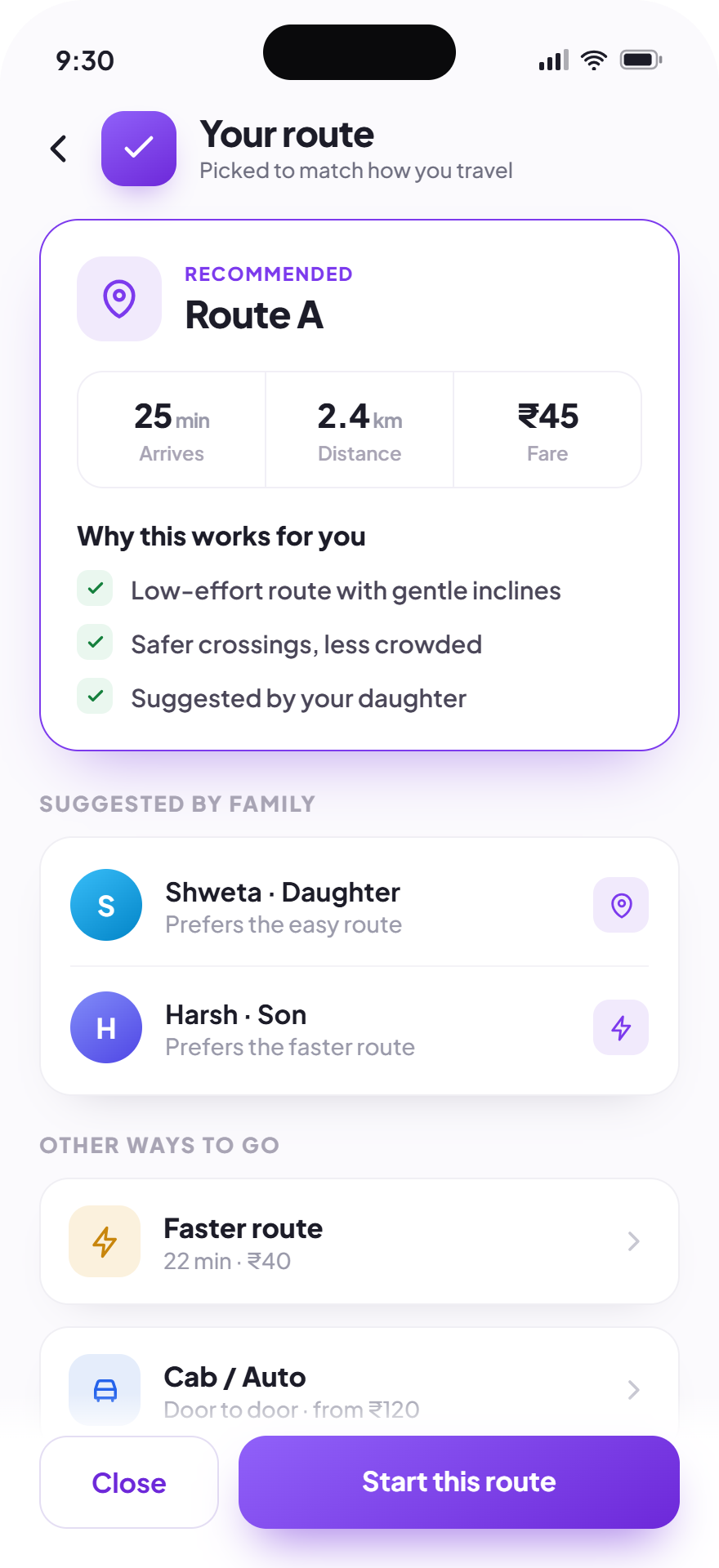
1 · Planning as risk reduction
Collaborative trip creation, preference sliders (safety vs efficiency), and environmental awareness.
2 · Route selection as explanation
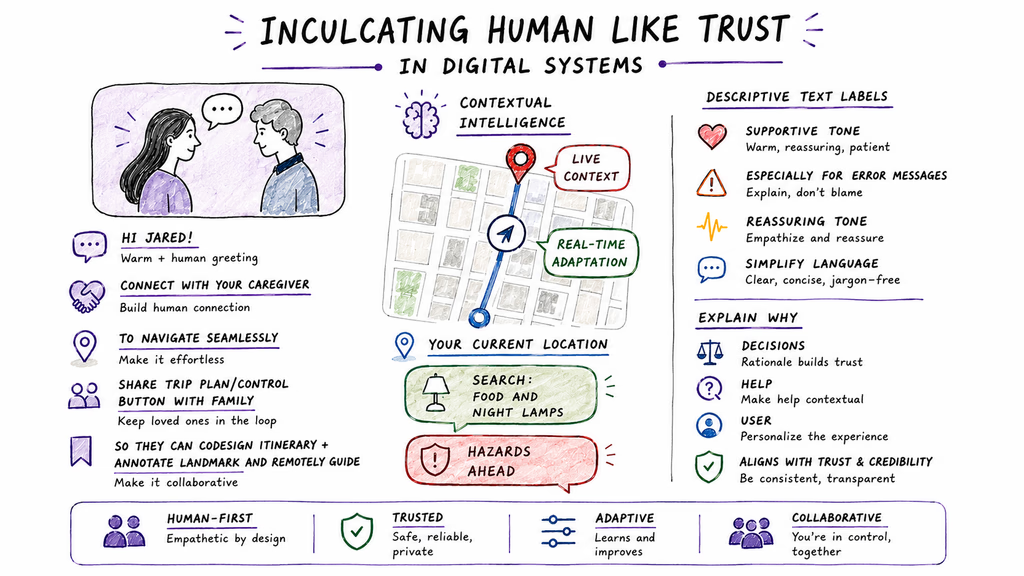
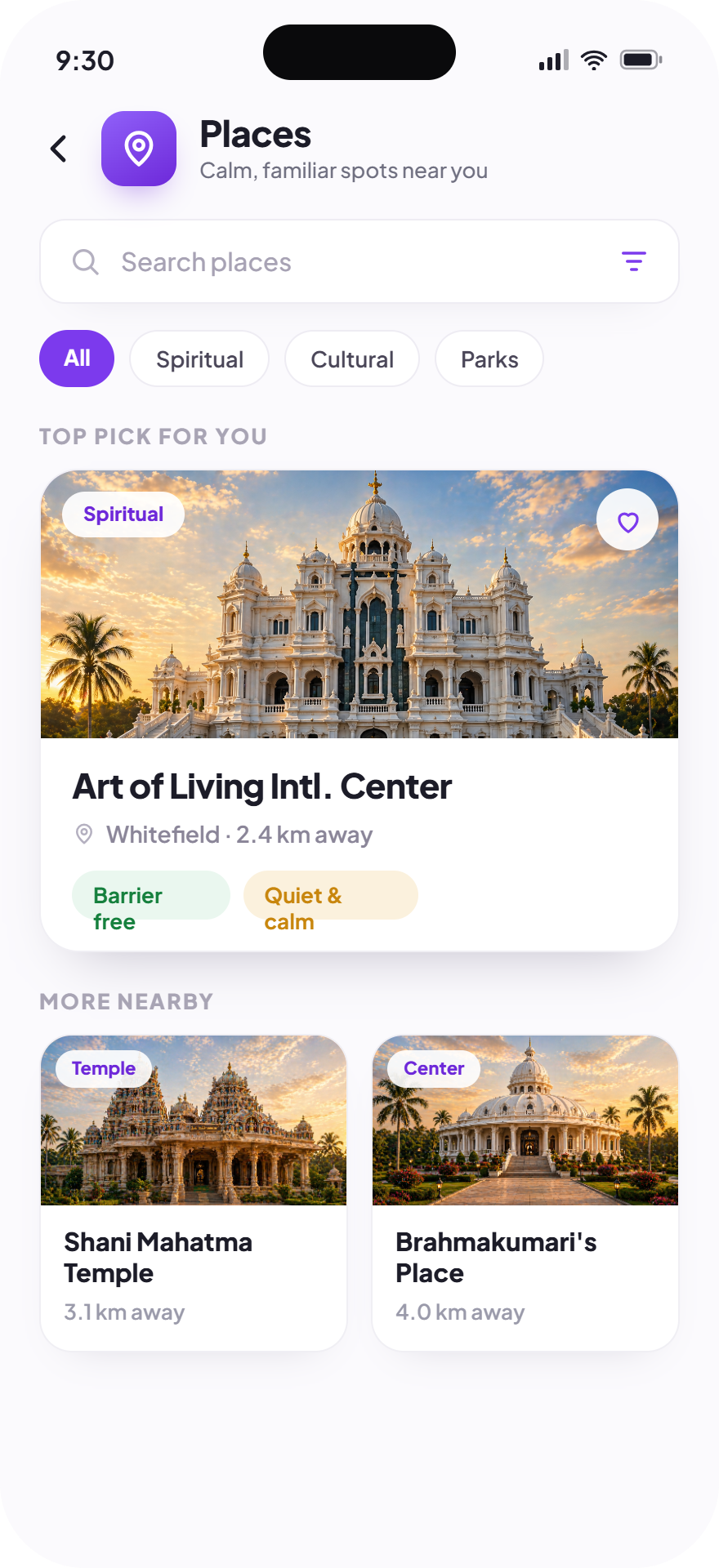
Not just options, but why each route exists, annotated with familiarity, safety, and effort.
3 · Co-planning as default
Family suggestions embedded into the decision flow, not external communication.
4 · Life-Space as feedback loop
Post-trip reflection feeds long-term mobility confidence.
This project began as an exploration of navigation. It evolved into a rethinking of mobility as a system of confidence, trust, and recovery. Users don't fail because systems are inaccurate, they fail because systems don't support them when uncertainty emerges.
The future of mobility won't be defined by precision, but by the ability to absorb failure, distribute trust, and sustain confidence over time.